The Best Colored Glassware: Amber, Fluted and Jewel-Toned Picks
This post contains affiliate links. If you buy through them, we may earn a small commission at no cost to you.
Our top pick among the glassware in this guide is Amber Ribbed Glassware Set (Set of 6, 16 oz) ($35.99). Lead-free amber glass with a vintage fluted texture — the quintessential moody-amber tumbler that glows by candlelight. Check price →
Shop the Glassware
Tap any piece to shop it.

Estelle Colored Glass Regal Goblet (Set of 6, Cobalt)
Hand-blown by century-old Polish artisans — the jewel-tone goblet you've seen all over design press, and worth the hype.
Check price on Estelle →Glassware compared at a glance
| Glassware | Best for | Price | Shop link | Save |
|---|---|---|---|---|
| Estelle Colored Glass Regal Goblet (Set of 6, Cobalt) | The icon | ~$195 / set | Shop → | |
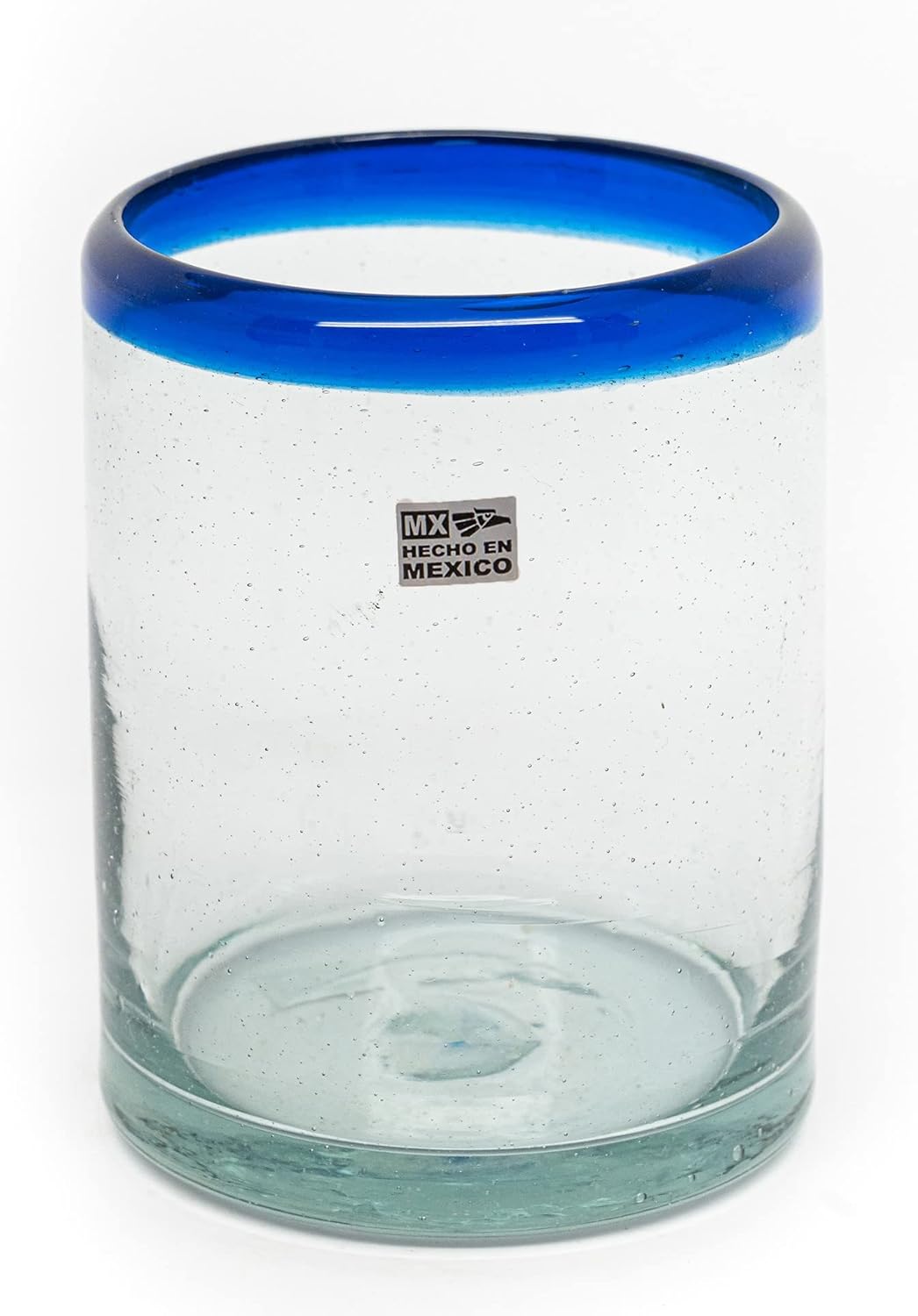 EMPORION Mexican Tumblers w/ Cobalt Rim (Set of 6) EMPORION Mexican Tumblers w/ Cobalt Rim (Set of 6) | Best Estelle dupe | $40.95 | Shop → | |
 Estelle Wine Stemware (Set of 6, Amber Smoke) Estelle Wine Stemware (Set of 6, Amber Smoke) | Best warm tone | ~$195 / set | Shop → | |
 MexHandcraft Confetti Rocks Glasses (Set of 6) MexHandcraft Confetti Rocks Glasses (Set of 6) | Most cheerful | $86.99 | Shop → | |
 Handmade con Amor Blue Confetti Tumblers (Set of 6) Handmade con Amor Blue Confetti Tumblers (Set of 6) | Best big pour | $55.00 | Shop → | |
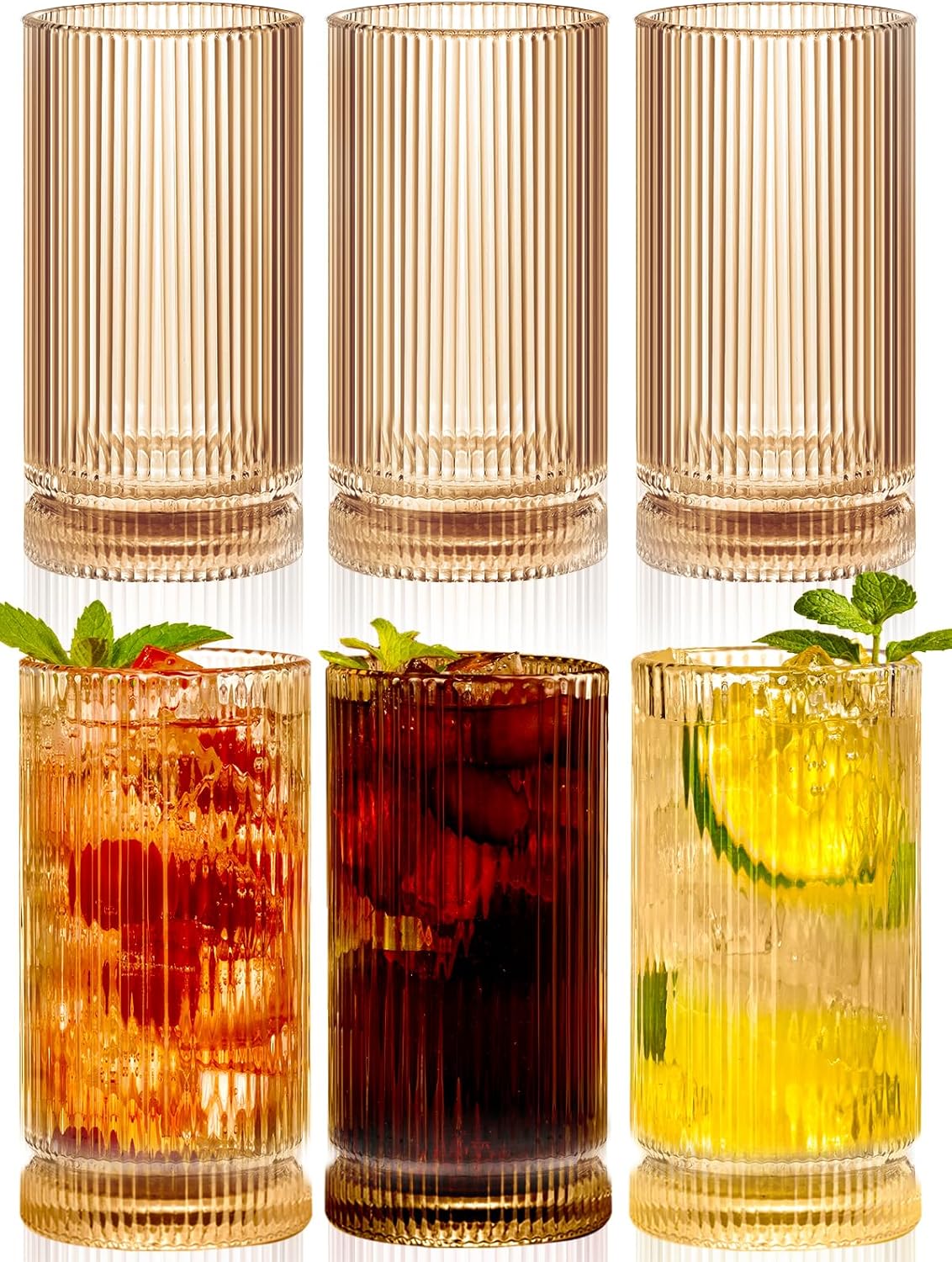 Amber Ribbed Glassware Set (Set of 6, 16 oz) Amber Ribbed Glassware Set (Set of 6, 16 oz) | Best overall | $35.99 | Shop → | |
 Qipecedm Ribbed Highball Glasses (Set of 6, 16 oz) Qipecedm Ribbed Highball Glasses (Set of 6, 16 oz) | Best fluted (clear) | $19.99 | Shop → | |
 Amber Glass Pitcher with Lid (64 oz) Amber Glass Pitcher with Lid (64 oz) | Best centerpiece | $18.99 | Shop → | |
 Estelle Coupe (Amber Smoke) Estelle Coupe (Amber Smoke) | Splurge | $165–195 / set | Shop → | |
 Amber & Black Tortoiseshell Tumblers (Set of 6) Amber & Black Tortoiseshell Tumblers (Set of 6) | Most dramatic | $40–60 | Shop → | |
 Red Co. Vintage Botanist Floral-Embossed Green Glasses, 12 oz, Set of 4 Red Co. Vintage Botanist Floral-Embossed Green Glasses, 12 oz, Set of 4 | Best green | $21.95 | Shop → |
Shop the guide
Tap any piece to shop it.
- Estelle Colored Glass Regal Goblet (Set of 6, Cobalt) — Hand-blown by century-old Polish artisans — the jewel-tone goblet you've seen all over design press, and worth the hype.
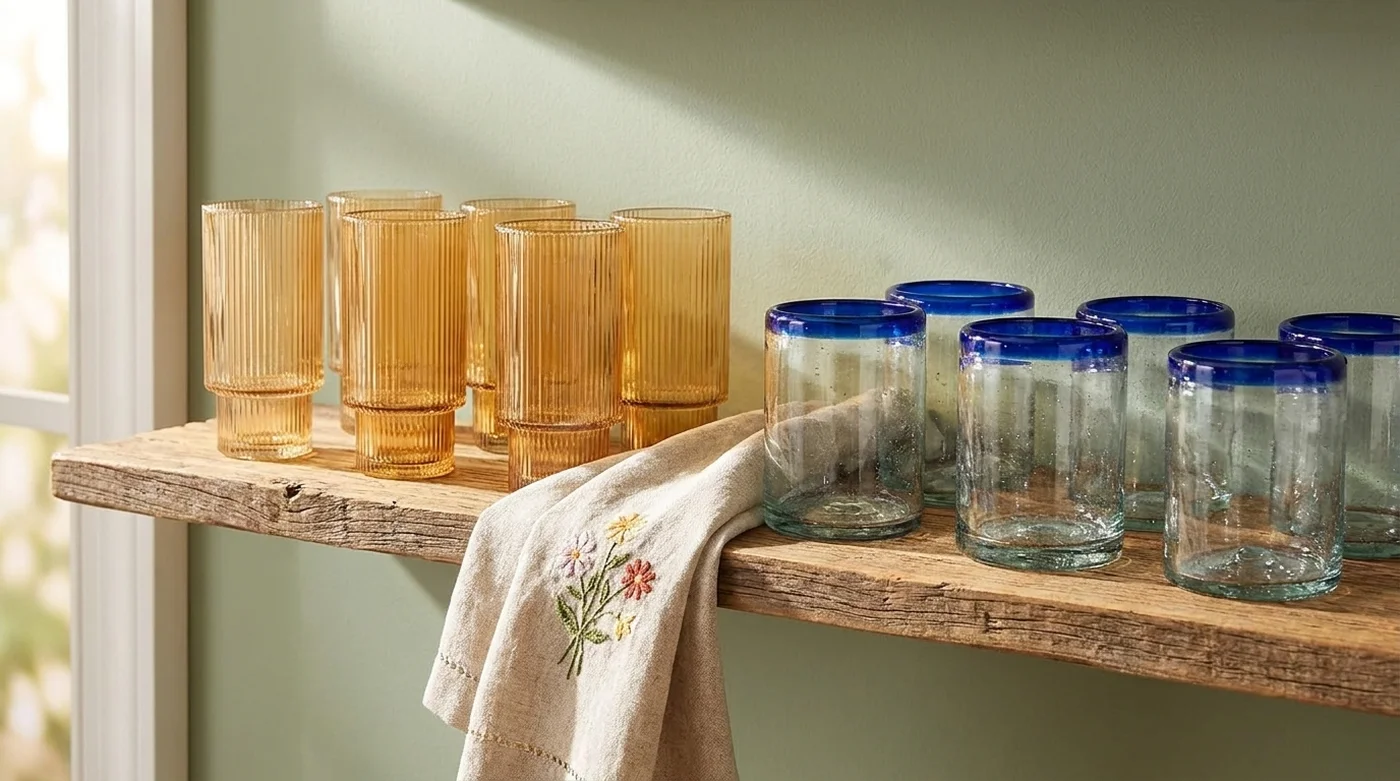
- EMPORION Mexican Tumblers w/ Cobalt Rim (Set of 6) — Rustic recycled bubble glass from Mexico with a cobalt-blue rim — the Estelle look for a fraction of the price.
- Estelle Wine Stemware (Set of 6, Amber Smoke) — Smoky-amber hand-blown stemware — the depression-glass-revival colorway that glows on a candlelit table.
- MexHandcraft Confetti Rocks Glasses (Set of 6) — Clear glass shot through with multicolor 'confetti' crystals, hand-blown in Tonalá — fun, grippy, and impossible to be sad around.
- Handmade con Amor Blue Confetti Tumblers (Set of 6) — Larger 15 oz recycled hand-blown tumblers with blue confetti flecks and signature little bubbles — everyday glasses with soul.
- Amber Ribbed Glassware Set (Set of 6, 16 oz) — Lead-free amber glass with a vintage fluted texture — the quintessential moody-amber tumbler that glows by candlelight.
- Qipecedm Ribbed Highball Glasses (Set of 6, 16 oz) — Vertical fluted stripes on a tall 16-oz highball, dishwasher-safe — the ribbed look without the color, ready to pair with amber.
- Amber Glass Pitcher with Lid (64 oz) — A borosilicate amber carafe for iced tea or bedside water — the anchor piece that pulls an amber drink station together.
- Estelle Coupe (Amber Smoke) — Hand-blown amber-smoke coupes — the showpiece for cocktail hour and the prettiest thing on a moody bar cart.
- Amber & Black Tortoiseshell Tumblers (Set of 6) — Hand-blown amber-and-black tortoiseshell — a richer, more dramatic amber than a plain tumbler for a truly moody table.
- Red Co. Vintage Botanist Floral-Embossed Green Glasses, 12 oz, Set of 4 — The green this list was missing.
Evidence type: editorial research — specs, materials, and owner reviews compared across retailers; we have not hands-on tested these unless a guide says so. Links and prices last checked September 2, 2026. See our editorial policy.
Nothing transforms a table faster than colored glass. One set of jewel-tone goblets or confetti tumblers and even a Tuesday dinner looks intentional. Here's the range — from the hand-blown icon to the budget dupes that genuinely hold up.
Quick picks: The icon — Estelle Regal Goblet · Best dupe — EMPORION cobalt-rim · Most cheerful — MexHandcraft confetti · Best big pour — Handmade con Amor · Best green — Red Co. Vintage Botanist.
What to look for before you buy
Colored glass is one of the few categories where the cheap version can genuinely pass for the expensive one — but only if you check the right five things first.
1. Through-body colour or a surface coating. This is the single decision that determines how long the set lasts. Glass coloured in the melt keeps its colour permanently and survives a dishwasher; sprayed or "lustre" coatings sit on the surface, and heat plus alkaline detergent will eventually cloud or strip them. Look at the foot and the rim: through-body colour is the same depth everywhere, and a chipped coated glass shows clear glass underneath.
2. Wall thickness at the rim. Thin rims feel expensive and drink better; thick pressed rims feel sturdy and chip less. Neither is wrong, but they suit different rooms — thin for a laid table, thick for a kitchen used by children.
3. Whether it is hand-blown or pressed. Hand-blown glass has slight asymmetry, a visible pontil area on the base and no seam. Pressed glass has a faint mould seam running up the side. The seam is not a defect; it is just how the price gets to twenty dollars.
4. Capacity, honestly read. "Tumbler" covers everything from a 10 oz water glass to a 16 oz highball. Check the ounces rather than the photo — a set that looks generous in a styled shot is often four inches tall and holds less than a mug.
5. Set size and how it stacks. Sets of four and sets of six do not combine gracefully on a table of eight. Recycled hand-made glass also varies by a few millimetres within one set, so it will not nest in a cupboard the way machine-made glass does.
6. Whether you can get more later. Almost every colourway here is a short run. If a set matters to you, buy one more glass than you need on the first order.
Estelle vs. the dupes
Estelle is hand-blown heirloom glass at an heirloom price. The Mexican recycled-glass sets capture the same colored-glass joy for a fraction — they're less uniform, but that hand-made character is part of the charm.
How the eleven compare
| Set | Colour | Type | Price | Best for | | --- | --- | --- | --- | --- | | Estelle Regal Goblet (6) | Cobalt | Hand-blown goblet | ~$195/set | The icon | | Estelle Wine Stemware (6) | Amber smoke | Hand-blown stem | ~$195/set | Warmest tone | | Estelle Coupe | Amber smoke | Hand-blown coupe | $165–195/set | Splurge | | EMPORION Mexican Tumblers (6) | Clear, cobalt rim | Recycled tumbler | $35–45 | Best Estelle dupe | | MexHandcraft Confetti Rocks (6) | Multicolour confetti | Recycled rocks glass | $40–50 | Most cheerful | | Handmade con Amor Confetti (6) | Blue confetti | Recycled tumbler | $45–55 | Biggest pour | | Amber Ribbed Glassware (6, 16 oz) | Amber | Ribbed tumbler | $32–38 | Best overall | | Qipecedm Ribbed Highball (6, 16 oz) | Amber | Ribbed highball | $18–24 | Best value | | Amber Glass Pitcher (64 oz) | Amber | Lidded pitcher | $28–38 | Centrepiece | | Amber & Black Tortoiseshell (6) | Amber and black | Tumbler | $40–60 | Most dramatic | | Red Co. Vintage Botanist (4, 12 oz) | Green | Embossed tumbler | ~$20–26 | Best green |
Read the price column per set, not per glass — the two Estelle lines are six-piece sets, and the gap between them and the recycled Mexican glass narrows considerably once you do that.
Style it
Mix two colorways rather than matching perfectly, and let the glass do the decorating — colored stems plus plain plates always looks designed. The rule of thumb is that the glass should be the only patterned thing at eye level: set it against plain scalloped dinnerware and the shape of the plate reads instead of competing.
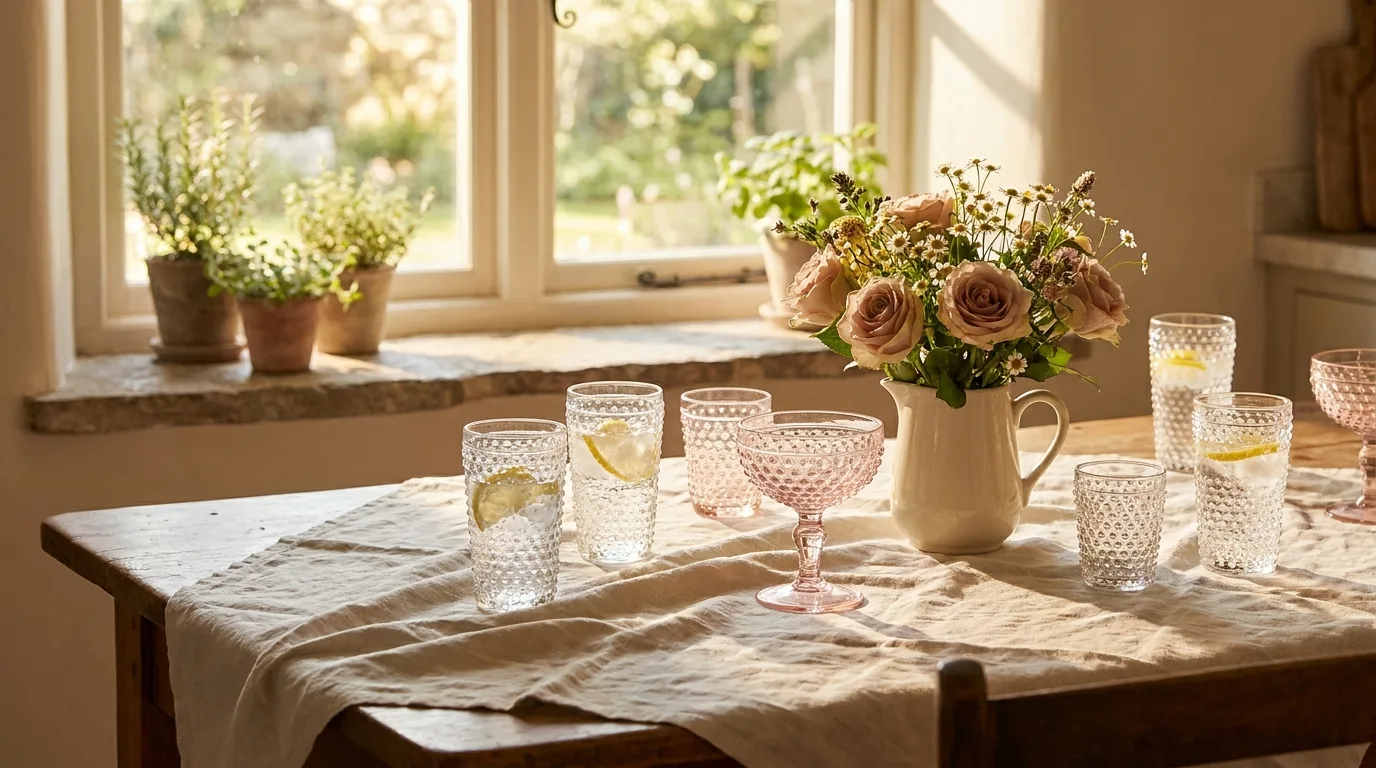
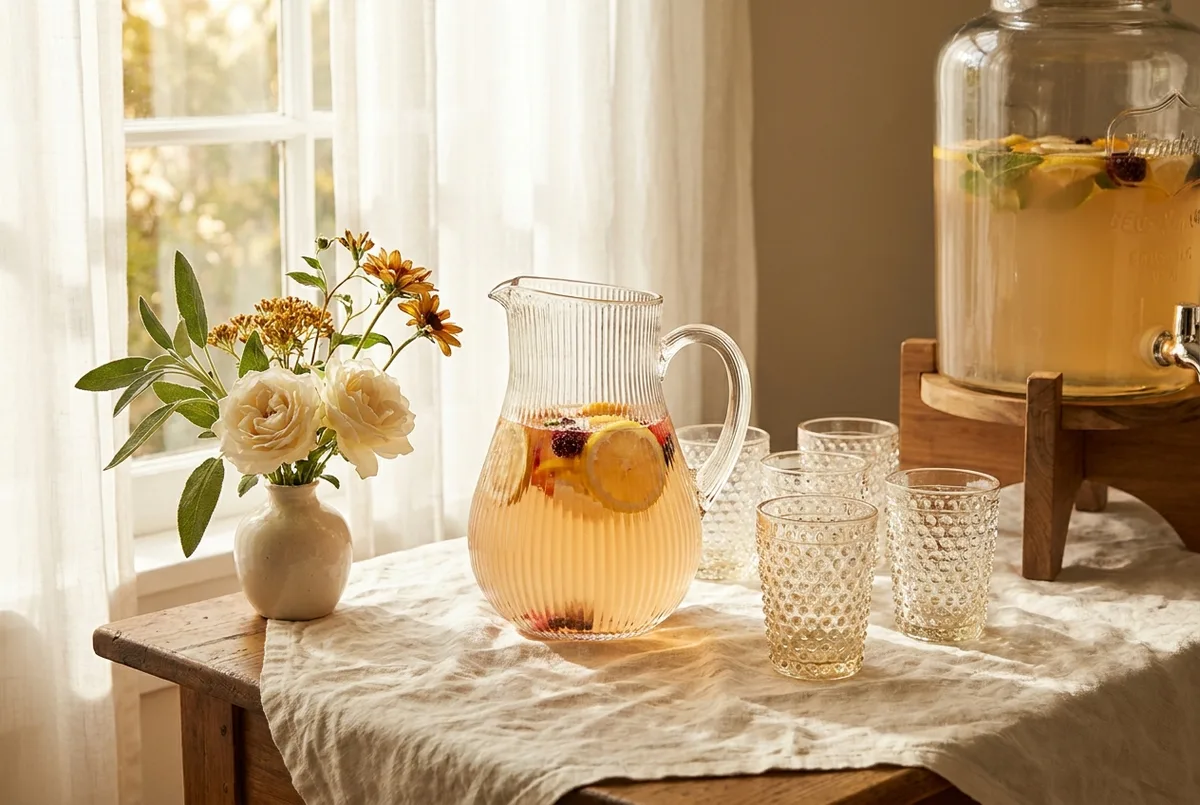
Coloured glass also earns its keep away from the table. A few amber tumblers and a pitcher turn a sideboard into a drinks station without any furniture changing, and the same instinct — one warm colour, repeated — is what makes hobnail glassware work on an open shelf. For an outdoor table, keep the good glass indoors and use the sturdier recycled sets with gingham picnic tableware, which is forgiving of a garden table that is never quite level.
Are colored glasses dishwasher-safe?
This is the question that decides whether you reach for them daily or save them for guests. Solid-colored glass — where the color runs all the way through, like jewel-tone goblets and Mexican bubble glass — is usually dishwasher-safe and keeps its color for years. Surface-coated or "lustre" finishes (the iridescent or sprayed-on metallic looks) are the ones to hand-wash; harsh detergent and high heat can cloud or strip them over time. As a rule, the affordable confetti and bubble glasses are the workhorses, while the prettier coated pieces are worth a gentler routine.
Mixing colors without it looking chaotic
You don't need a matching set. Pick two or three tones that share a mood — warm ambers and pinks, or cool greens and cobalts — and let the glasses vary in shape. A table of slightly mismatched colored glass looks collected and intentional; ten identical bright glasses can look like a party-supply order. Anchor the mix with a few clear or amber pieces so the eye has somewhere to rest.
Amber and fluted glass, specifically
Amber is the colour that does the most work in a cottage kitchen, because it's the one that changes through the day. Flat morning light makes it look honey-brown; late afternoon sun turns the same glass gold. That's a property of the glass, not the styling, and it's why amber shows up in so many photographs of otherwise plain shelves.
Fluting amplifies it. The vertical ribs refract light along their length, so a fluted amber tumbler throws warm colour onto whatever it's standing on. Smooth amber glass is more restrained and stacks better; fluted is the one to buy if the glasses will be out on display rather than in a cupboard.
Practical notes before you buy a set. Check whether the colour is through-body or a surface coating — coated glass fades and can go patchy in a dishwasher, while through-body colour is permanent. Look at the base thickness too: pressed vintage-style glass is usually heavier at the bottom, which makes it more stable but also means it takes longer to dry upside down. And buy one more than you need. These are almost always short production runs, and matching a set two years later is close to impossible.
Where colored glassware disappoints
Five honest problems, none of which show up in a styled photograph.
It makes drinks look wrong. Deep cobalt and amber hide the colour of what is in them. White wine looks the same as apple juice, and a cloudy drink reads as murky rather than cloudy. If you care about how a drink looks, keep the colour to water glasses and tumblers.
Coated finishes do not survive a real kitchen. The iridescent and lustre glasses that photograph best are the ones that go patchy soonest. Hand-washing works, but it takes a household that actually hand-washes.
Recycled glass has bubbles, and some people hate them. The bubbles and the slightly uneven rims are the charm and they are also, unavoidably, irregularities. Anyone who wants six identical glasses should buy machine-made.
Colours are discontinued constantly. A broken glass from a two-year-old set is usually unreplaceable, which turns a set of six into a set of five permanently.
Heavy pressed bases hold water. The thick foot that makes vintage-style glass stable also traps a ring of water when it dries upside down, so these need draining at an angle or a tea towel.
Care and storage
Hand-wash anything coated, iridescent or hand-blown, and use the dishwasher freely for through-body pressed glass on a normal cycle rather than a hot pot setting. Skip the heated dry — thermal shock is what crazes glass, not the water.
Store colour out of long direct sun if it is a coating; through-body colour is stable, but sprayed finishes can fade on a sunny windowsill over a few summers. Do not stack tumblers inside each other, especially hand-made ones with variable diameters, because that is how two glasses become one wedged unit and then two broken ones. And keep a soft cloth for the bases: hard water leaves a white ring on coloured glass that looks like damage long before it is.
FAQ
Is colored glass food-safe? Reputable brands use lead-free glass; always confirm on the listing, and be more careful with genuinely vintage pieces, where older glazes and decorations were not made to modern standards.
Can colored glassware go in the dishwasher? Through-body coloured pressed glass usually can, on a normal cycle. Hand-blown glass like Estelle, and anything with an iridescent or sprayed finish, should be hand-washed to protect the surface.
Do colored glasses change the taste of a drink? No. The colour is in or on the glass, not in anything your drink touches, so it is purely visual. It does change how the drink looks, which is a real consideration for wine.
How can I tell through-body colour from a surface coating? Look at the rim and the underside of the foot. Through-body colour is the same depth everywhere, including on the raw edge of the base. A coating is often thinner at the rim, and a chip in coated glass shows clear glass underneath.
Is hand-blown glass worth several times the price of a recycled set? Only if you want the object rather than the effect. Hand-blown pieces have thinner walls, more even colour and a weight in the hand that the cheap sets do not have. Recycled Mexican glass gives you most of the visual result on a laid table, with bubbles and slight size variation as the trade.
How many colours can I mix on one table? Two or three that share a temperature — warm ambers with pinks, or cool greens with cobalt. Anchor the mix with a few clear or amber pieces so the eye has somewhere to rest.
Do recycled-glass sets arrive all the same size? Not exactly. Hand-made glass varies by a few millimetres in height and rim diameter within a single set. That is normal and is the point, but it also means the glasses will not nest or stack neatly in a cupboard.
What happens if I break one? Usually nothing good — colourways run in short batches and are discontinued constantly, so a set bought two years ago is rarely matchable. Buying one extra glass at the outset costs a few dollars and saves replacing all six later.