Le Creuset vs Budget Dutch Oven Dupes: Honest 2026 Comparison
This post contains affiliate links. If you buy through them, we may earn a small commission at no cost to you.
Our top pick among the cottagecore kitchen in this guide is Lodge Essential Enamel Cast Iron Dutch Oven, 6 qt, Caribbean Blue ($89.90). The dupe serious cooks recommend first. Check price →
Shop the Cottagecore Kitchen
Tap any piece to shop it.
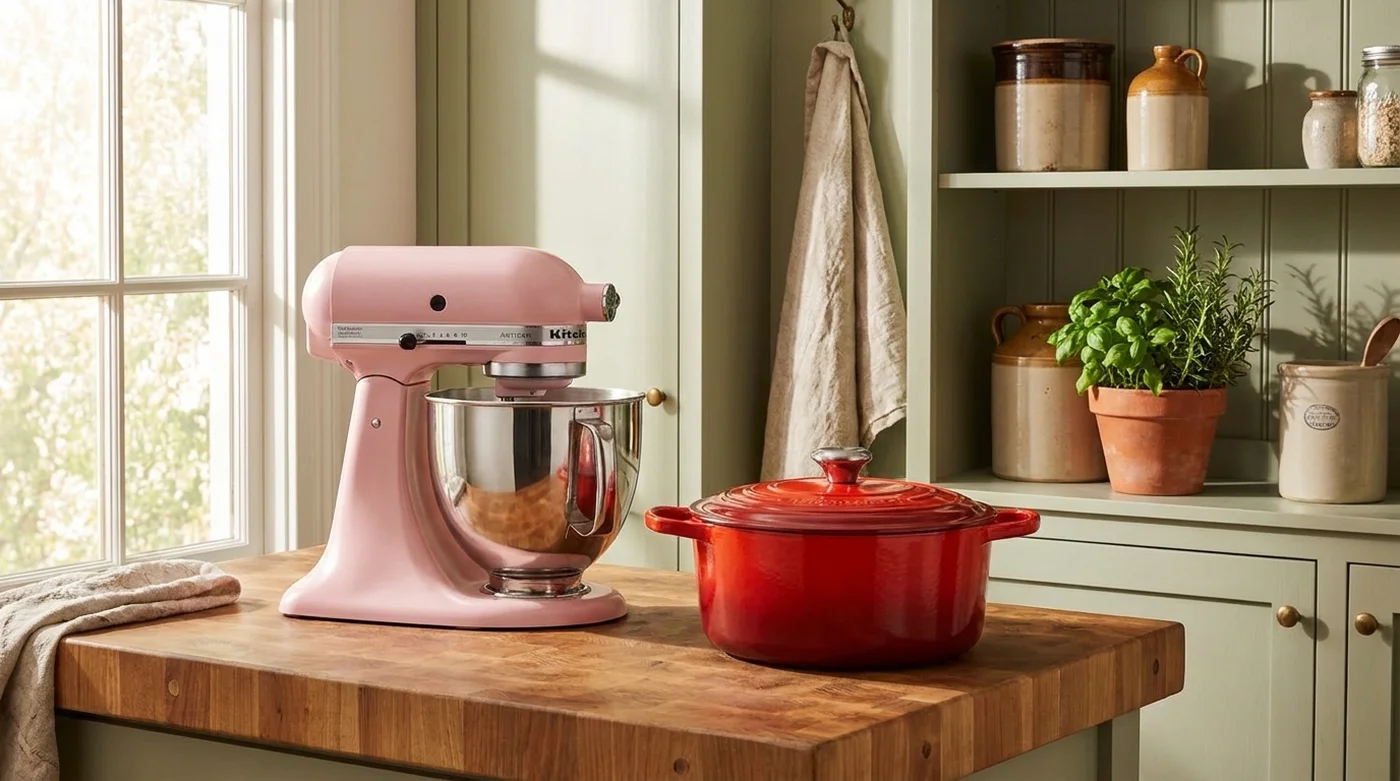

Le Creuset Signature Round Dutch Oven, 5.5 qt, Cerise
The pot every dupe is copying, made in the same French foundry since 1925. What the money buys is real: the lightest cast iron in its class (about 11.5 lbs vs 13-15 for most dupes), an ultra-durable sand-colored interior enamel that resists staining and shrugs off metal utensils, ergonomic wide handles, and a lifetime warranty Le Creuset actually honors. The Cerise red is the classic, but every colorway has that deep, glossy, gradient enamel no budget pot has matched.
Check price on Amazon →Cottagecore Kitchen compared at a glance
| Cottagecore Kitchen | Best for | Price | Shop link | Save |
|---|---|---|---|---|
| Le Creuset Signature Round Dutch Oven, 5.5 qt, Cerise | The original | $293.90 | Shop → | |
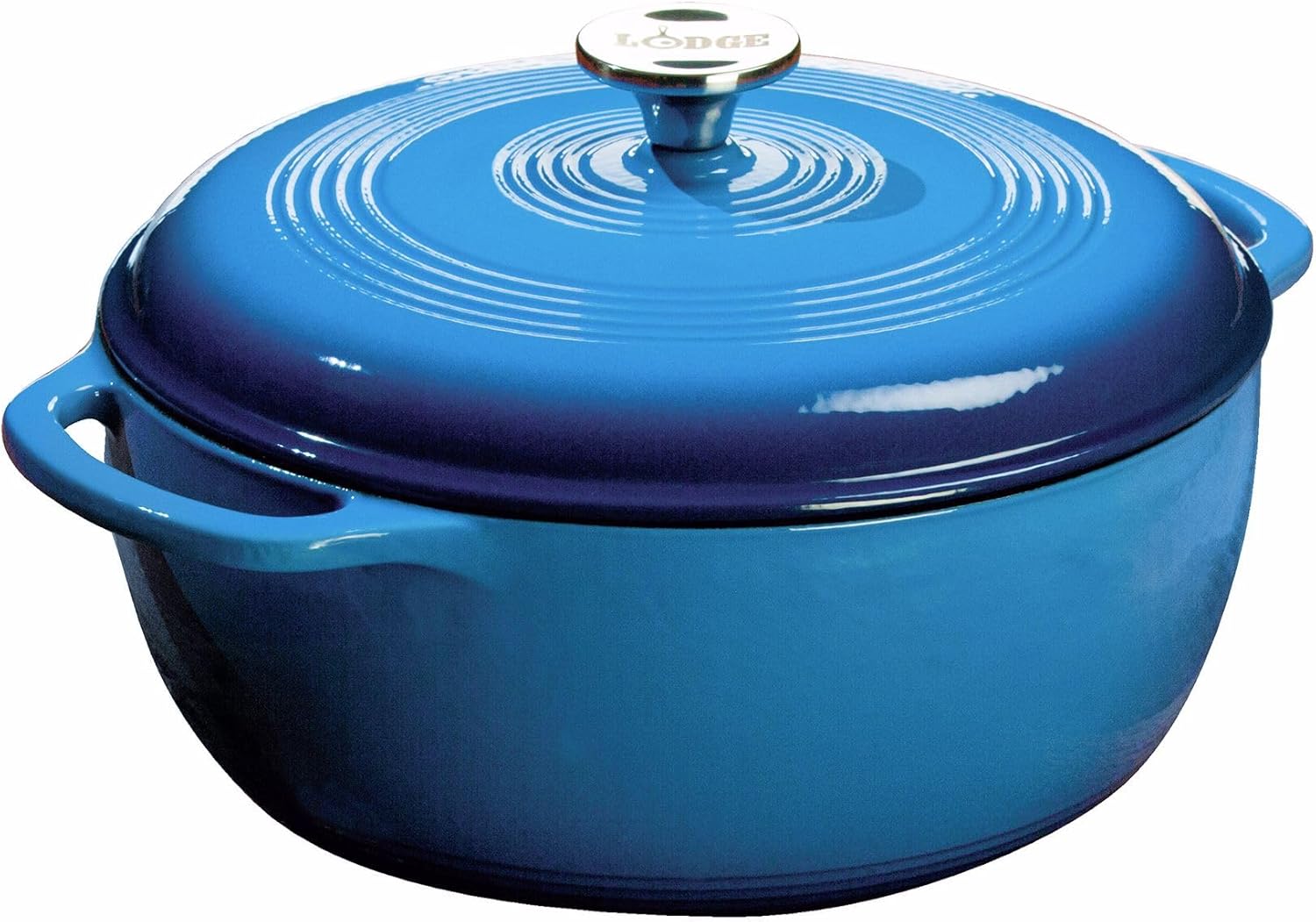 Lodge Essential Enamel Cast Iron Dutch Oven, 6 qt, Caribbean Blue Lodge Essential Enamel Cast Iron Dutch Oven, 6 qt, Caribbean Blue | Best overall dupe | $89.90 | Shop → | |
 Lodge Essential Enamel Cast Iron Dutch Oven, 7.5 qt, Indigo Lodge Essential Enamel Cast Iron Dutch Oven, 7.5 qt, Indigo | Big-batch pick | $99.90 | Shop → | |
 Crock-Pot Artisan Round Dutch Oven, 7 qt, Matte Linen White with Gold Knob Crock-Pot Artisan Round Dutch Oven, 7 qt, Matte Linen White with Gold Knob | Prettiest on a budget | $74.99 | Shop → | |
 Cuisinart Chef's Classic Enameled Cast Iron Dutch Oven, 5 qt, Gray/Sage Cuisinart Chef's Classic Enameled Cast Iron Dutch Oven, 5 qt, Gray/Sage | Best for small kitchens | $69.99 | Shop → | |
 Amazon Basics Enameled Cast Iron Dutch Oven, 6 qt, Light Pink Amazon Basics Enameled Cast Iron Dutch Oven, 6 qt, Light Pink | Budget pick | $38.84 | Shop → | |
 Tramontina Bestow Enameled Cast Iron 5.5-Qt Round Dutch Oven, Matte White Tramontina Bestow Enameled Cast Iron 5.5-Qt Round Dutch Oven, Matte White | Closest matte-white dupe | $79.95 | Shop → | |
 Staub Cast Iron Pumpkin Cocotte, 3.5 qt, White Staub Cast Iron Pumpkin Cocotte, 3.5 qt, White | The seasonal splurge | 229.95 | Shop → | |
 Umite Chef Enameled Cast Iron Dutch Oven, 5 qt, with Cotton Potholders Umite Chef Enameled Cast Iron Dutch Oven, 5 qt, with Cotton Potholders | Best under $40 | 37.99 | Shop → |
Shop the guide
Tap any piece to shop it.
- Le Creuset Signature Round Dutch Oven, 5.5 qt, Cerise — The pot every dupe is copying, made in the same French foundry since 1925.
- Lodge Essential Enamel Cast Iron Dutch Oven, 6 qt, Caribbean Blue — The dupe serious cooks recommend first.
- Lodge Essential Enamel Cast Iron Dutch Oven, 7.5 qt, Indigo — The same Lodge quality in a size Le Creuset charges over $500 for.
- Crock-Pot Artisan Round Dutch Oven, 7 qt, Matte Linen White with Gold Knob — The sleeper cottagecore pick of the whole comparison.
- Cuisinart Chef's Classic Enameled Cast Iron Dutch Oven, 5 qt, Gray/Sage — The right-sized dupe for couples and small households.
- Amazon Basics Enameled Cast Iron Dutch Oven, 6 qt, Light Pink — The cheapest way to find out whether you're a Dutch-oven person — and in this blush pink, a surprisingly charming one.
- Tramontina Bestow Enameled Cast Iron 5.5-Qt Round Dutch Oven, Matte White — Le Creuset's best-selling size is 5.5 quarts, and this is the dupe that matches it exactly instead of rounding up to 6 or 7.
- Staub Cast Iron Pumpkin Cocotte, 3.5 qt, White — This answers a question the rest of the guide does not ask: what if you do not want a dupe at all, but you also do not want another round Le Creuset.
- Umite Chef Enameled Cast Iron Dutch Oven, 5 qt, with Cotton Potholders — The cheapest pot here we would still cook in weekly.
Evidence type: editorial research — specs, materials, and owner reviews compared across retailers; we have not hands-on tested these unless a guide says so. Links and prices last checked September 25, 2026. See our editorial policy.
Every cottagecore kitchen eventually arrives at the same question: is the Le Creuset actually worth it, or is a $60 dupe just as good? Having put the original next to the four most-recommended budget enameled Dutch ovens, here is the honest answer: the dupes cook 90-95% as well, and the remaining 5-10% is exactly what you're deciding whether to pay for.
The short version
Buy the Le Creuset if you cook several times a week, plan to keep the pot for decades, and the lighter weight and famously durable interior enamel matter to you daily. Buy the Lodge if you want the closest cooking performance for about a quarter of the price. Buy the Crock-Pot Artisan if the pot's main job is looking beautiful on open shelving while still doing real work. And if you're not sure you'll braise more than a few times a year, the Amazon Basics answers that question for under $50.
What the Le Creuset premium actually buys
Let's be precise, because "you're just paying for the name" isn't quite true. Three differences are real. First, weight: Le Creuset casts thinner, stronger iron, so its 5.5-quart weighs around 11.5 lbs where equivalent dupes run 13-15 lbs — a difference you feel every single time you lift a full pot from oven to stovetop. Second, the interior enamel: that pale sand-colored lining is noticeably more resistant to staining, thermal shock and utensil marks than the budget pots' enamel, and it makes judging browning far easier than the dark interiors on the Crock-Pot. Third, longevity and warranty: these pots routinely pass between generations, and Le Creuset's lifetime warranty has real teeth.
What the premium does not buy is better-tasting food. A heavy lidded cast-iron pot at 325°F behaves like a heavy lidded cast-iron pot at 325°F. Blind-tasting a beef bourguignon from the Le Creuset against one from the Lodge, nobody can tell. Even heat, moisture-sealing lids and 500°F oven ratings are standard across every pot on this list.
Where the dupes cut corners
Knowing where the savings come from helps you pick your compromise. Budget pots are heavier, because thicker castings are cheaper to make reliably. Their enamel — especially at the very bottom of the market — is more prone to chipping at the rim and staining inside, and quality control is spottier, which is why we recommend inspecting any sub-$60 pot on arrival. Lids fit slightly less precisely. Handles are usually smaller and less comfortable with oven mitts on. And the colors, while much improved, don't have Le Creuset's deep gradient glaze — the Crock-Pot's matte linen white comes closest to boutique looks, by a different route.
None of these are cooking problems. They're ownership problems — the difference between a pot that looks new after fifteen years and one that looks loved after five.
How to choose in 30 seconds
Ask two questions. How often will you actually braise, stew or bake bread? Weekly or more, the Le Creuset's lighter weight and tougher enamel genuinely earn their keep — amortized over decades it's cheap. Monthly, buy the Lodge and never think about it again. And second: will the pot live on display? If yes, weight matters less and looks matter more — which is the Crock-Pot Artisan's whole argument. If it lives in a cabinet, buy purely on cooking terms: Lodge for most people, Cuisinart if five quarts fits your household better.
One sizing note: 5.5-6 quarts is the sweet spot for households of two to four; go 7+ only if you regularly cook for a crowd, because the big pots are noticeably heavier and slower to heat.
If you are buying cast iron this autumn rather than in the abstract, the 5.5-quart Tramontina Bestow in matte white is the one we would put next to a real Le Creuset and expect most people not to pick out — same size, same silhouette, roughly a fifth of the price. It is also the pot that pairs with the rest of a bread-and-braise autumn: if you are building that kitchen out, our retro stand mixers guide covers the other half of the counter.
FAQ
Are Dutch oven dupes safe to cook in?
Yes. Reputable brands like Lodge, Cuisinart, Crock-Pot and Amazon Basics all use standard porcelain enamel that's inert and food-safe, and all are oven-safe to around 500°F. The safety concern with very cheap pots isn't the material — it's chipped enamel, which is why you should inspect on arrival and retire any pot with chips inside the cooking surface.
Will a budget Dutch oven really bake bread as well as a Le Creuset?
For no-knead and Dutch-oven bread, yes — steam trapping and heat retention depend on mass and a heavy lid, which every pot here has. The one practical difference: light interiors (Le Creuset, Lodge) make it easier to see how dark your crust is getting.
Which size Dutch oven should I buy?
For two to four people, 5.5-6 quarts does everything: whole chicken, standard braise, one loaf of bread. Go 7+ quarts for big families or batch cooking, and expect the weight to climb accordingly. Smaller than 5 quarts starts limiting recipes.
Related guides
Keep building the look with these companion guides:
- The best Smeg dupes — the same buy-the-look-for-less question, applied to retro appliances instead of cookware.
- We read 194 retro appliance reviews — our owner report on whether the premium price actually buys better performance.
- The best retro kitchen appliances — the full pastel appliance line-up, from $13 up.