The Best Vintage & Aged Terracotta Pots for 2026
This post contains affiliate links. If you buy through them, we may earn a small commission at no cost to you.
Our top pick among the home décor in this guide is vensovo Terracotta Clay Pots with Saucers, 6 in (4 Pack) ($19.06). Plain unglazed clay in the shape everyone pictures when they think terracotta — six inches across, matching saucers included, and it patinas into that chalky white bloom within a season. Check price →
Shop the Home Décor
Tap any piece to shop it.

vensovo Terracotta Clay Pots with Saucers, 6 in (4 Pack)
Plain unglazed clay in the shape everyone pictures when they think terracotta — six inches across, matching saucers included, and it patinas into that chalky white bloom within a season. Buying four at once is how a windowsill herb row ends up looking collected rather than assembled one pot at a time.
Check price on Amazon →Home Décor compared at a glance
| Home Décor | Best for | Price | Shop link | Save |
|---|---|---|---|---|
| vensovo Terracotta Clay Pots with Saucers, 6 in (4 Pack) | Best classic | $19.06 | Shop → | |
 Pottiffe Terracotta-Look Planters with Saucers, 10 in (4 Pack) Pottiffe Terracotta-Look Planters with Saucers, 10 in (4 Pack) | Best lightweight | $21.99 | Shop → | |
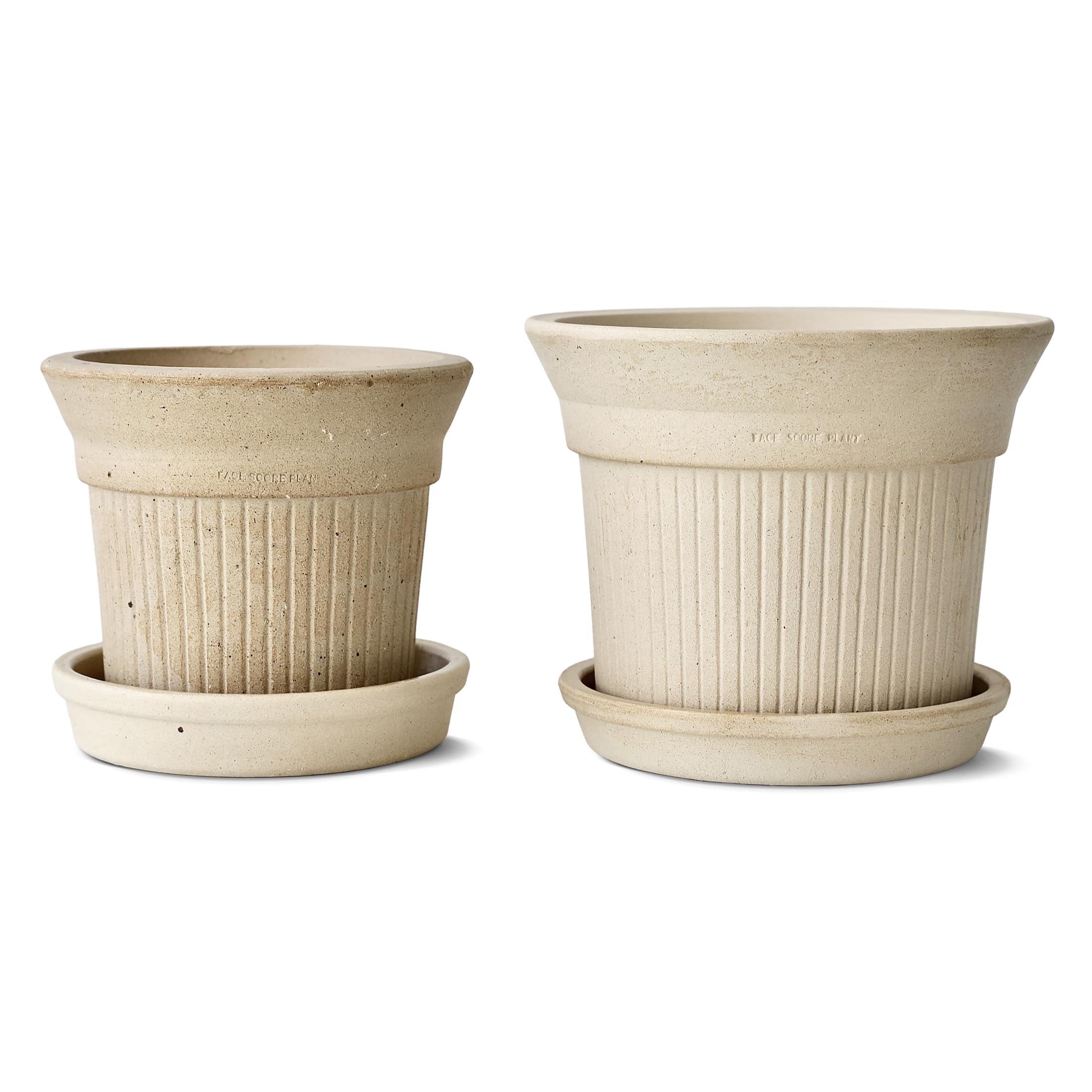 Whitewashed Terracotta Pots with Saucer (2-Pack) Whitewashed Terracotta Pots with Saucer (2-Pack) | Best aged look | $39.99 | Shop → | |
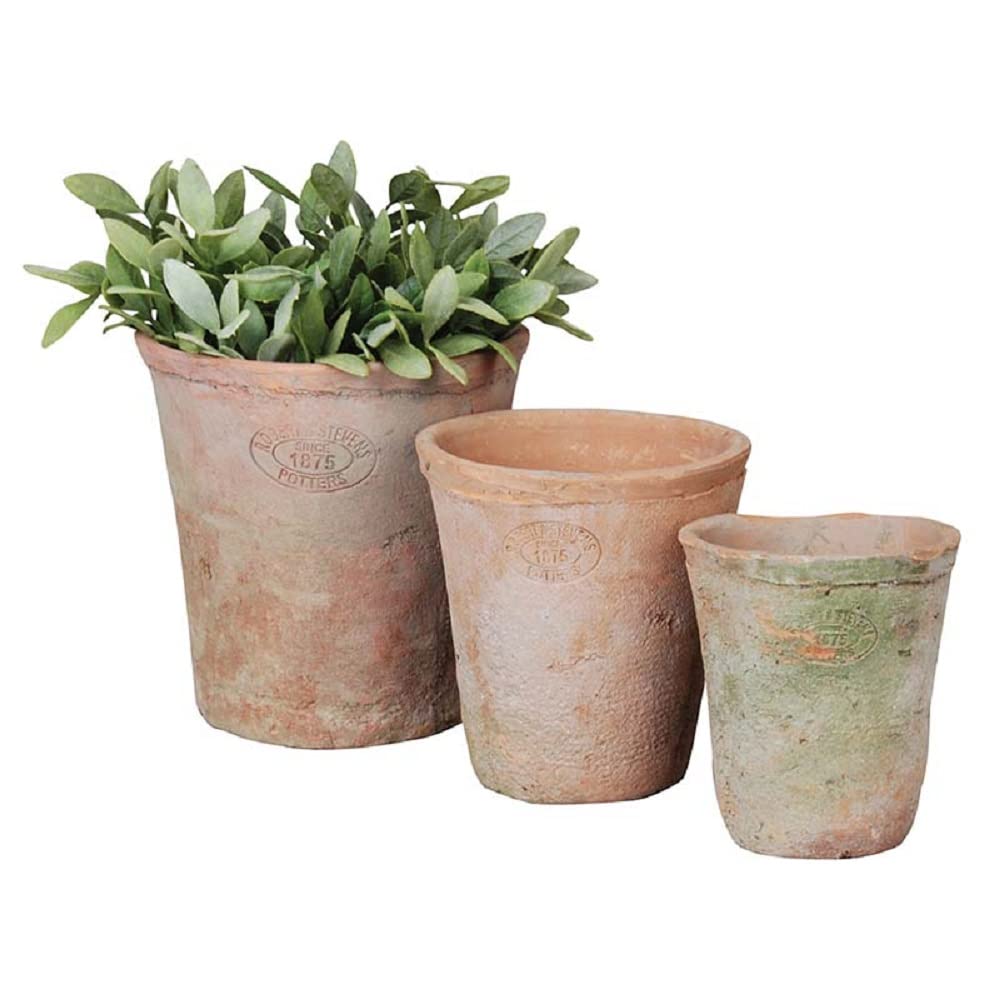 Esschert Design Aged Terracotta Pots (Set of 3) Esschert Design Aged Terracotta Pots (Set of 3) | Best value set | $79.99 | Shop → | |
 Antique Terracotta Planter Antique Terracotta Planter | The real thing | ~$100–300+ | Shop → | |
 Italian Classic & Vintage Terracotta Pots Italian Classic & Vintage Terracotta Pots | Best authentic | $28.99 | Shop → | |
 Orceler 4 in Terracotta Pots with Saucers (6 Pack) Orceler 4 in Terracotta Pots with Saucers (6 Pack) | Best small pots | $17.58 | Shop → | |
 HERDUK Terracotta Pots with Saucers, 6 in (4 Pack) HERDUK Terracotta Pots with Saucers, 6 in (4 Pack) | Best six-inch four-pack | $19.99 | Shop → |
Shop the guide
Tap any piece to shop it.
- vensovo Terracotta Clay Pots with Saucers, 6 in (4 Pack) — Plain unglazed clay in the shape everyone pictures when they think terracotta — six inches across, matching saucers included, and it patinas into that chalky white bloom within a season.
- Pottiffe Terracotta-Look Planters with Saucers, 10 in (4 Pack) — Four ten-inch pots that weigh what one real clay pot weighs, with drainage holes already drilled and saucers included.
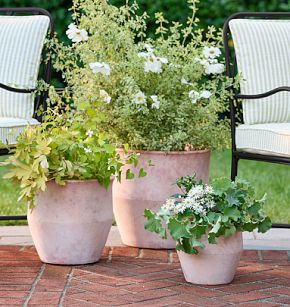
- Whitewashed Terracotta Pots with Saucer (2-Pack) — A whitewashed, textured finish that nails the weathered, brought-in-from-the-garden look.
- Esschert Design Aged Terracotta Pots (Set of 3) — Pre-aged ribbed multi-packs for an instant weathered look without waiting years.
- Antique Terracotta Planter — A genuinely old, one-of-a-kind European piece with real patina you can't fake.
- Italian Classic & Vintage Terracotta Pots — Authentic imported Italian and antique terracotta for a true heirloom-garden look.
- Orceler 4 in Terracotta Pots with Saucers (6 Pack) — The four-inch size is the one you actually reach for indoors: small enough to line up along a windowsill or a kitchen shelf, big enough for a supermarket herb pot to be repotted into.
- HERDUK Terracotta Pots with Saucers, 6 in (4 Pack) — Six inches is the size most houseplants actually arrive in, so this is the pack that lets you repot a whole windowsill at once instead of one plant at a time.
Evidence type: editorial research — specs, materials, and owner reviews compared across retailers; we have not hands-on tested these unless a guide says so. Links and prices last checked September 11, 2026. See our editorial policy.
Nothing says cottage garden like aged terracotta — sun-faded, a little mossy, with that perfect warm clay color. You can buy it genuinely old, or fake decades of weathering for a few dollars. Here's the full range, and the four things that separate a pot that ages beautifully from one that just looks cheap.
Quick picks: Best small pots — Orceler four-inch six-pack · Best classic — vensovo four-pack · Best lightweight — Pottiffe ten-inch four-pack · Best aged look — whitewashed embossed · The real thing — Rejuvenation antique.
How to choose terracotta that actually looks old
1. Fired clay, resin, or cement — decide before you look at photos. All three are sold under the word "terracotta" and they behave nothing alike. Fired clay is porous: it breathes, it wicks water out of the compost, and it grows the chalky salt bloom that is the whole point. Resin and plastic are light and frost-proof and will look exactly the same in five years as they do today. Cement composite splits the difference — heavy, weathers well, but it will not breathe. The listing will rarely say plainly which you are getting, so check the shipping weight: a genuine six-inch clay pot runs about 1.5–2 lb, a resin one a few ounces.
2. Look at the rim, not the front. This is the single most reliable tell in a product photo. Fired clay is the same colour through its whole thickness, so a rim shot or a cross-section looks matte and slightly grainy all the way down. Moulded resin has a skin: a hair glossier, a hair too even, and often a faint seam where the mould halves met. If every photo is shot dead-on from the front, that is usually why.
3. Check that the drainage hole is drilled, and that the saucer is included. A surprising number of decorative "planters" arrive with a solid base, because they are designed as cachepots to hide a nursery pot inside. That is fine if you know it, and fatal to the plant if you do not. Saucers are the other quiet cost — buying them separately often costs more than the pots did, and unglazed clay sitting directly on a windowsill will leave a damp ring on the wood.
4. Aged finishes are paint, and paint comes off. A whitewashed or limewashed pot is genuinely the fastest route to the look, and worth buying. But it is a surface treatment: it will scuff at the rim where you handle it, and it fades unevenly outdoors. True weathering — the mossy, blotchy kind — only comes from time, water, and shade. Buy whitewash for the shelf you look at, and plain clay for the pots you actually want to age.
The picks compared
| Pick | Material | Size | Saucer | ~Price | Best for | | --- | --- | --- | --- | --- | --- | | Orceler 6-pack | Fired clay | 4 in | Included | ~$16–20 | Herb rows, propagation, seedlings | | vensovo 4-pack | Fired clay | 6 in | Included | ~$19 | The default cottage-garden pot | | HERDUK 4-pack | Fired clay | 6 in | Included | ~$18–23 | Thicker walls, heavier feel | | Pottiffe 4-pack | Plastic/resin | 10 in | Included | ~$20–26 | Balconies, shelves, anywhere weight matters | | Whitewashed 2-pack | Fired clay + finish | Varies | Included | ~$18–30 | Instant aged look on a shelf | | Italian classic | Fired clay (Impruneta-style) | Large | No | ~$60–500+ | A single statement pot outdoors | | Rejuvenation antique | Genuine old clay | Varies | No | ~$100–300+ | The real thing, one of one |
Age it yourself (it's easy and free)
New terracotta looks orange and raw, but it weathers fast: leave plain unglazed pots outside, and rain plus a little shade gives you mossy patina within a season. For an instant head start, brush on watered-down white paint or a yogurt-and-water wash to encourage moss. Part shade matters more than people expect — a pot in full sun dries too fast for anything to take hold, and stays stubbornly orange.
Real clay vs. resin
Real terracotta breathes (great for herbs and roots) but is heavy, dries quickly, and cracks in a hard freeze. Resin look-alikes are light and frost-proof for big outdoor pots — a sensible choice where weight or weather is a problem. Many cottage gardeners use real clay up close and resin for the big statement planters. The rule of thumb that works: anything above about ten inches that you will need to move while it is planted should probably be resin.
Where terracotta actually earns its keep
A pot on its own is just a pot; grouped, it becomes the room. Three or five in mixed heights along a sill or a shelf is the arrangement that reads cottage rather than garden centre — odd numbers, one clearly taller, and at least one trailing plant to break the line. A glazed saucer under each one lets you keep them indoors on wood without ring marks.
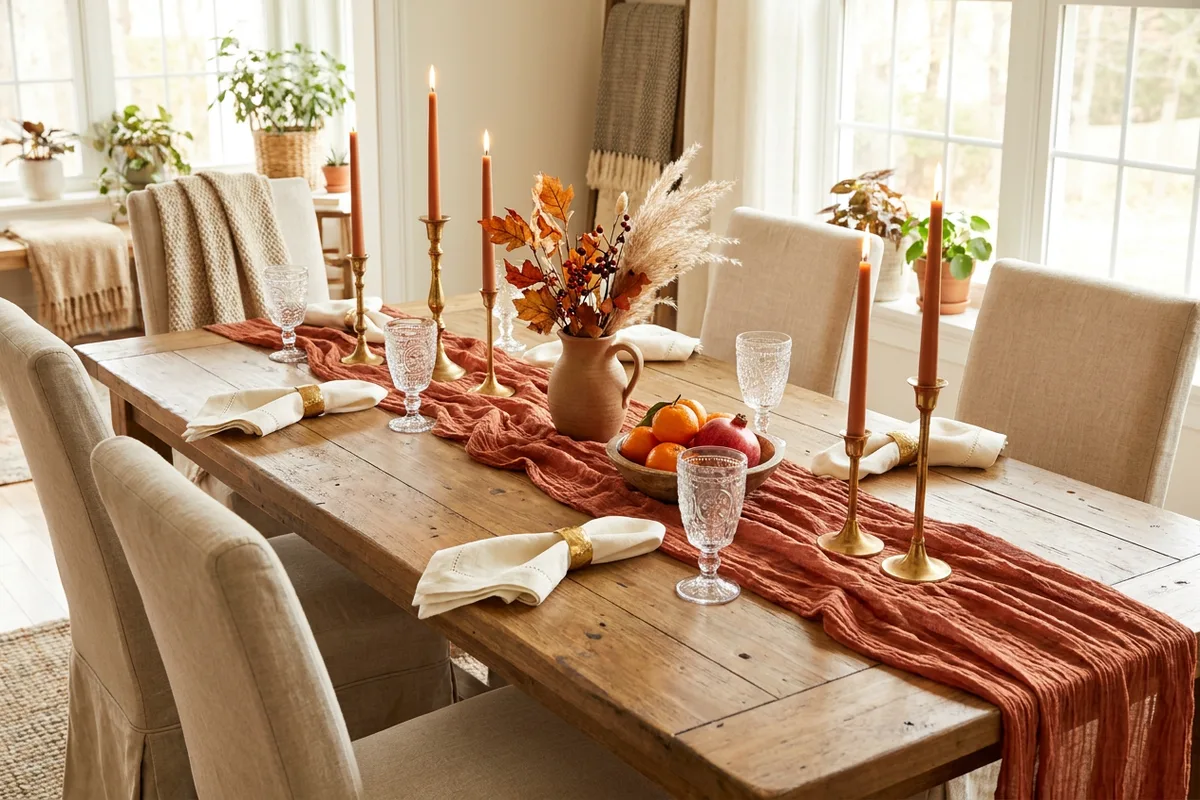
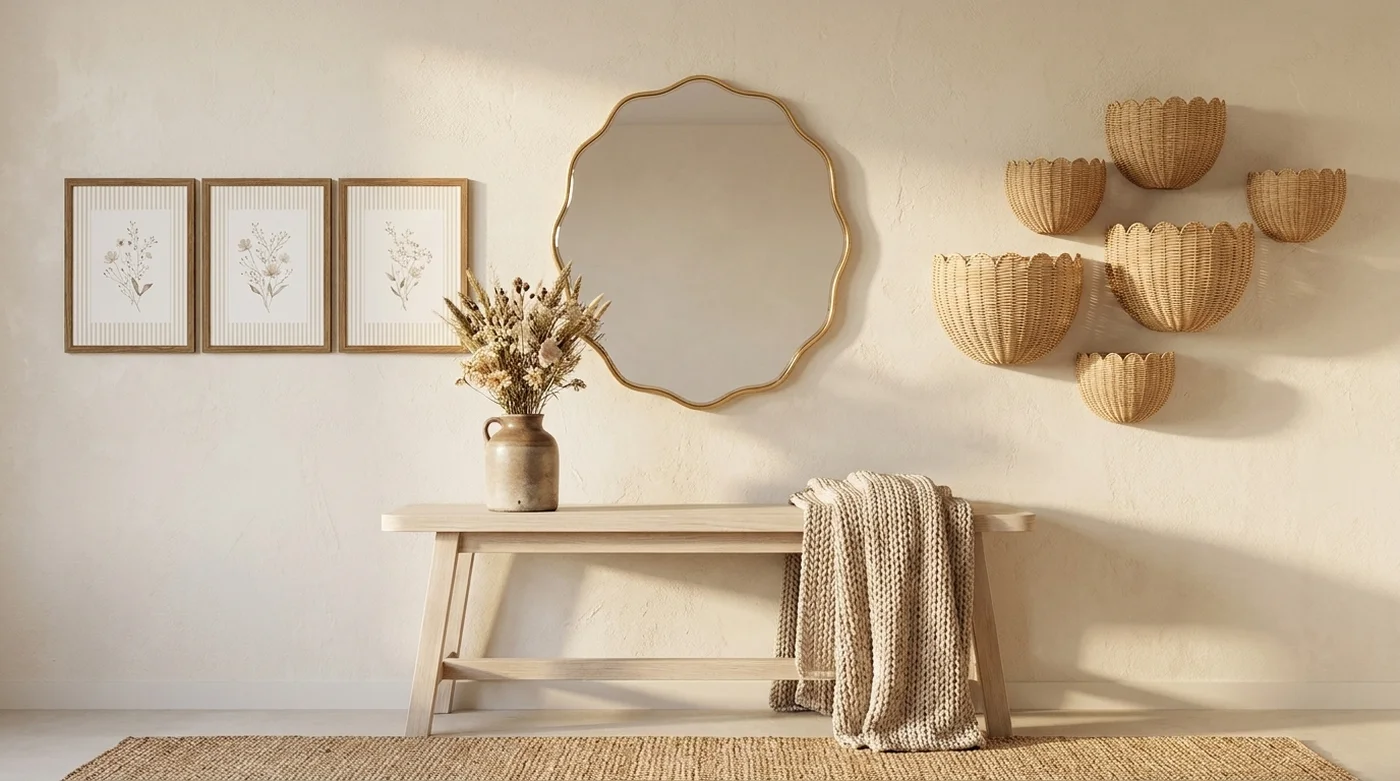
The warmest place for them is a bright, plant-heavy corner: aged clay, cane, and old glass are the whole palette of a cottagecore sunroom, and terracotta is the cheapest way into it. Hang a few woven wall baskets above the pots and the wall stops being empty without costing anything framed. Come autumn, the same pots take dried stems instead of living plants — the trick behind most of a cozy fall cottagecore setup.
Clay is not the only honest, utilitarian vessel worth leaving on an open shelf — a row of glass canning jars does the same job for dry goods, and the two materials look better standing together than either does alone. After dark the grouping needs a light source at pot height rather than overhead, which is why a cluster of clay usually ends up next to a beeswax pillar or a pair of brass tapers. For the rest of the palette these pots belong to, the home décor guides cover the cane, glass, and linen that go around them.
The honest drawbacks
Nobody writes these down, so here they are.
You will water roughly twice as often. Porous clay pulls moisture out through its walls, which is exactly why herbs like it and exactly why a thirsty plant on a sunny sill may need water daily in July. If you travel, put the thirsty things in glazed or plastic pots and keep clay for the tolerant ones.
Clay ships badly. Chipped rims in multi-packs are common enough that you should open the box expecting one, and buy from a seller with a straightforward returns policy. A chip on the rim is cosmetic; a crack running down the wall is not, because it will open up the first time the pot freezes.
The bloom is unpredictable. Hard water and heavy feeding produce it in weeks; soft water may never produce much at all. If you want a guaranteed white finish on a specific date, buy whitewashed rather than hoping.
Weight is a real constraint. A ten-inch clay pot full of wet compost is genuinely awkward to lift, and it will mark a windowsill or a shelf edge. Check what the surface can take before you commit to a row of them.
Freeze-cracking is not a myth. Unglazed clay left out damp through a hard winter splits along the wall, and there is no fixing it. This is the one failure mode that costs you the pot rather than just annoying you.
Caring for clay
Before the first planting, soak new pots in water for an hour, or the dry clay steals the moisture straight out of the compost and the plant sulks for a fortnight.
The white bloom is harmless mineral salt, and most people are buying pots specifically to get it. Scrub it off only if you dislike it — a dry brush first, then a wipe of half-and-half white vinegar and water, then a rinse.
Once a year, empty, dry, and brush out the old compost. Pests and fungus overwinter in the crust at the bottom, and a pot that goes straight from one plant to the next carries them along. Skip the bleach; if you want to sterilise, a very dilute vinegar soak and a proper dry in the sun does the job without leaving residue in the pores.
Indoors, cork pads under the saucers. Even a glazed saucer sweats against wood, and the ring it leaves is the kind of thing you notice once and then cannot stop noticing.
Before winter, empty everything you are leaving out, turn the pots upside down or store them under cover, and do not stack damp clay pots inside one another — they swell, jam, and crack on the way apart.
FAQ
Will terracotta survive winter outdoors? Unglazed clay can crack if it freezes while damp, because the water held in the clay body expands. In cold climates, empty and dry pots before the first hard frost and store them under cover, or use the resin look-alikes outdoors and keep the real clay for indoors and the growing season.
What are the best pots for windowsill herbs? Four- to six-inch real clay pots with matching saucers. Breathable clay suits herbs, which hate sitting wet, and a matched multi-pack lined up along a sill reads as a collection rather than as leftovers.
How do I tell real terracotta from a plastic look-alike in a listing? Weight and sound. A real six-inch fired clay pot is roughly 1.5–2 lb; a plastic one of the same size is a few ounces, so check the shipping weight. In the photos, look at the rim in cross-section — fired clay is the same colour all the way through, while moulded resin usually shows a slightly glossier, more uniform skin.
What is the white crust on my terracotta pots? Harmless mineral salt from your water and fertiliser, wicked to the surface as the clay dries. It is exactly the patina most people are buying these pots for. If you want it gone, a dry brush and a wipe of half-and-half white vinegar and water removes it.
Do terracotta pots need a drainage hole and a saucer? A hole, yes — clay breathes through its walls but it will not drain through a sealed base, and root rot is the commonest way these pots kill a plant. A saucer is optional outdoors, but indoors it is essential, because an unglazed clay base sitting on wood will leave a damp ring.
How do I make new terracotta look old? Leave it outdoors in part shade through one wet season and it will do it itself. To hurry it, brush on a thin wash of watered-down white paint, or a yogurt-and-water wash, which encourages moss and algae to take hold in the pores.