The Best Washed Linen Tablecloths for a Cottagecore Table
This post contains affiliate links. If you buy through them, we may earn a small commission at no cost to you.
Our top pick among the textiles and linens in this guide is Solino Home Cotton-Linen Hemstitch Tablecloth ($70.39). An openwork hemstitch border and a soft blend that only gets better with washing — the easy entry point. Check price →
Shop the Textiles & Linens
Tap any piece to shop it.
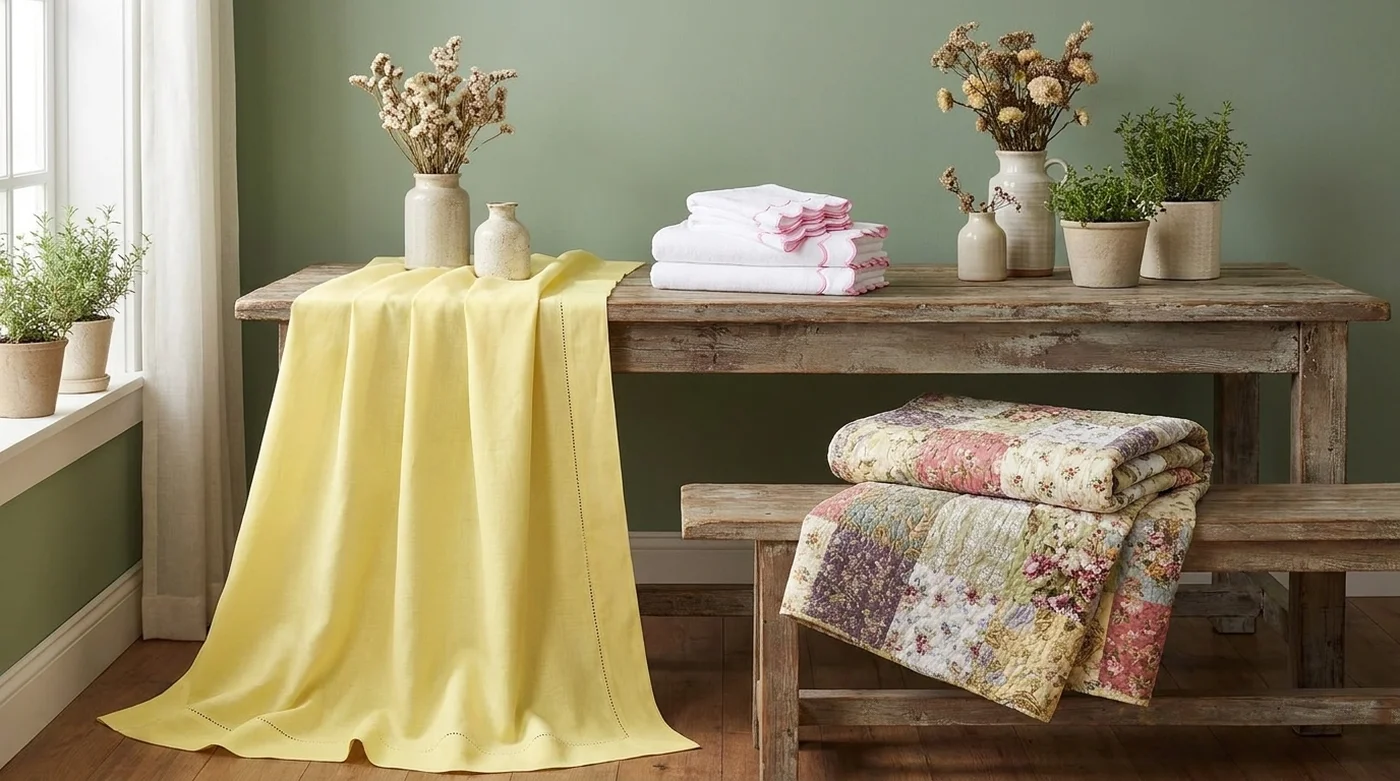

Solino Home Cotton-Linen Hemstitch Tablecloth
An openwork hemstitch border and a soft blend that only gets better with washing — the easy entry point.
Check price on Amazon →Textiles & Linens compared at a glance
| Textiles & Linens | Best for | Price | Shop link | Save |
|---|---|---|---|---|
| Solino Home Cotton-Linen Hemstitch Tablecloth | Best value | $70.39 | Shop → | |
 All Cotton and Linen Pure Linen Tablecloth All Cotton and Linen Pure Linen Tablecloth | Best rustic drape | $76.99 | Shop → | |
 EVERLY Stonewashed French Linen Hemstitch Tablecloth EVERLY Stonewashed French Linen Hemstitch Tablecloth | Best hemstitch | $81.99 | Shop → | |
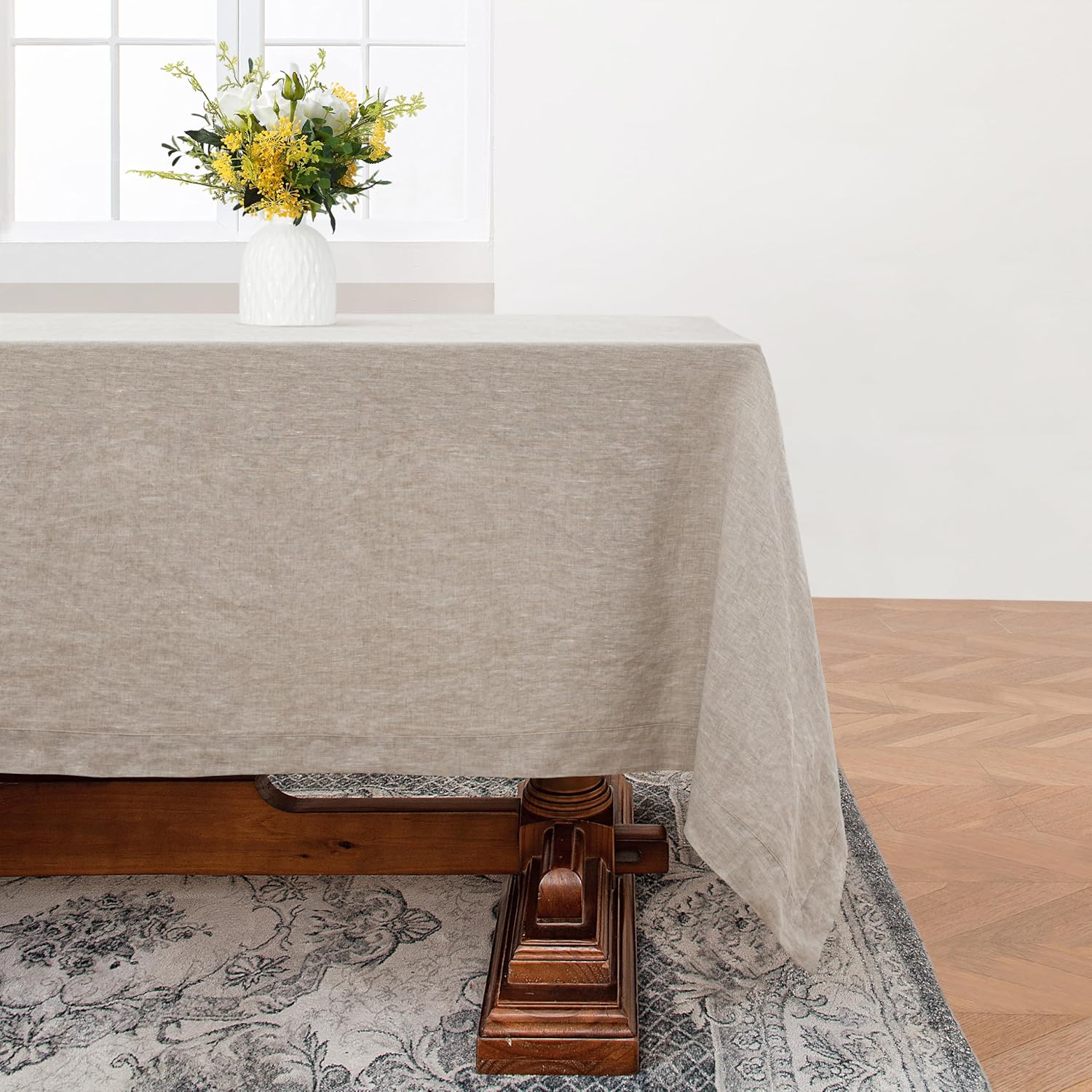 Linen World 100% French Linen Tablecloth (60×90) Linen World 100% French Linen Tablecloth (60×90) | Best natural linen | $88.99 | Shop → | |
 AmourLinen Washed Linen Tablecloth AmourLinen Washed Linen Tablecloth | Most colors | ~$60–120 | Shop → | |
 Solino Home 100% Pure Linen Tablecloth Solino Home 100% Pure Linen Tablecloth | Pure-linen step up | $199.99 | Shop → | |
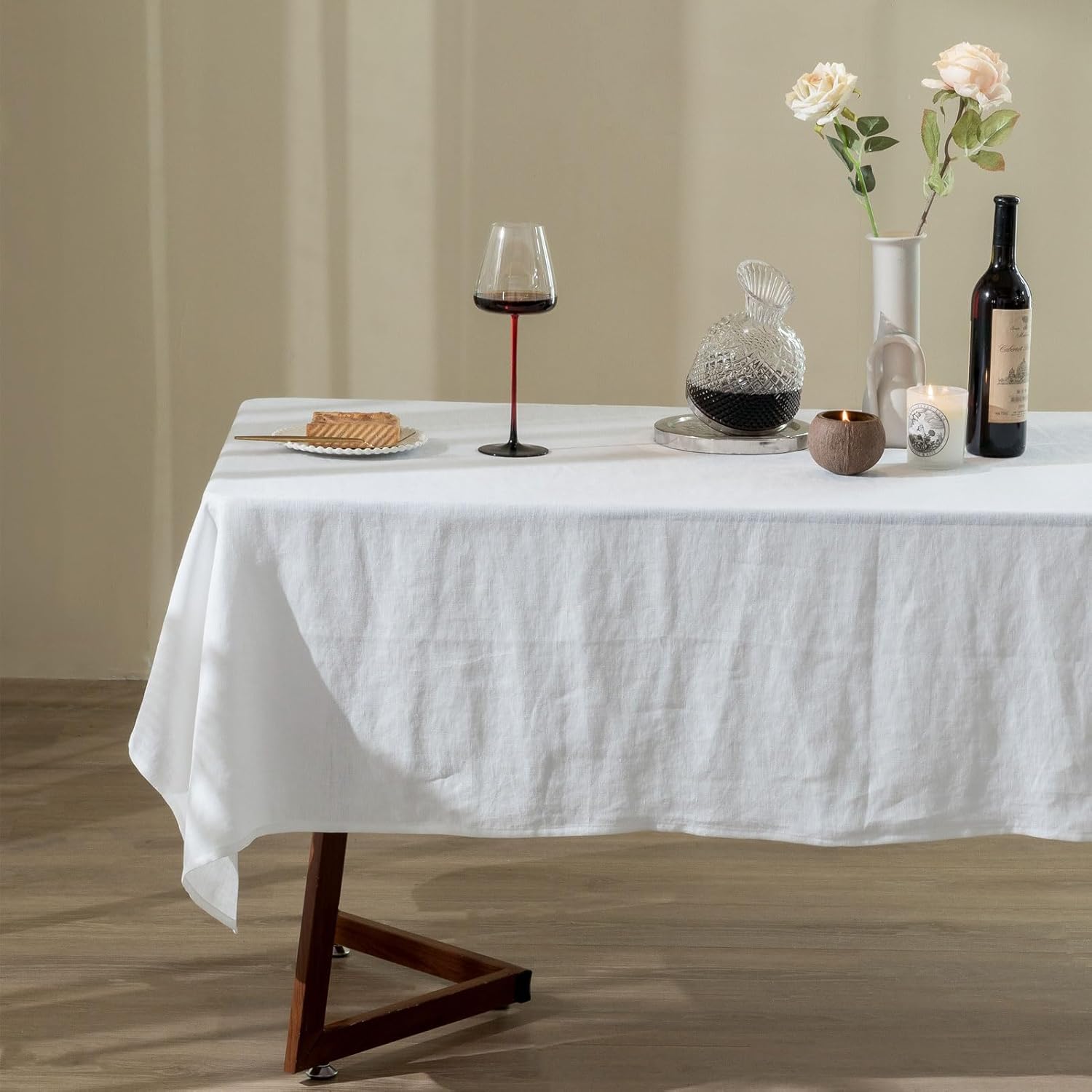 Talasily 100% Linen Tablecloth, Stone Washed (60x120) Talasily 100% Linen Tablecloth, Stone Washed (60x120) | Best long-table size | $71.99 | Shop → | |
 Solino Home 100% Linen Table Runner, Classic Hemstitch 14 x 72 Solino Home 100% Linen Table Runner, Classic Hemstitch 14 x 72 | Best linen runner | $39.99 | Shop → | |
 Rhyslinm Linen-Cotton Table Runner 14 x 60 Rhyslinm Linen-Cotton Table Runner 14 x 60 | Best budget | $15.99 | Shop → | |
 TOSMO 100% Linen Tablecloth, Sage (52 x 70) TOSMO 100% Linen Tablecloth, Sage (52 x 70) | Best color | $47.99 | Shop → |
Shop the guide
Tap any piece to shop it.
- Solino Home Cotton-Linen Hemstitch Tablecloth — An openwork hemstitch border and a soft blend that only gets better with washing — the easy entry point.
- All Cotton and Linen Pure Linen Tablecloth — 100% stonewashed linen with that faded, rumpled cottage drape — and it's machine washable.
- EVERLY Stonewashed French Linen Hemstitch Tablecloth — 100% French linen with a tidy hemstitch edge, sized generously for rectangle tables.
- Linen World 100% French Linen Tablecloth (60×90) — Stonewashed 100% French flax linen with a soft, lived-in drape and natural slubs — the authentic rustic-linen look for a fraction of boutique prices.
- AmourLinen Washed Linen Tablecloth — Pre-washed European flax in lots of soft cottage shades, with custom sizing available.
- Solino Home 100% Pure Linen Tablecloth — The pure-linen upgrade from the same trusted brand — pre-washed with a natural slub texture.
- Talasily 100% Linen Tablecloth, Stone Washed (60x120) — Pure stonewashed linen in a genuine 60 by 120 inch cut — the size for a harvest table or two tables pushed together, which most linen listings simply do not offer.
- Solino Home 100% Linen Table Runner, Classic Hemstitch 14 x 72 — Pure European flax linen with a hand-hemstitched border and an OEKO-TEX certification — it softens with every wash instead of wearing out.
- Rhyslinm Linen-Cotton Table Runner 14 x 60 — A linen-cotton blend at roughly a third of the price of pure flax, with enough slub texture to avoid looking flat under candlelight.
- TOSMO 100% Linen Tablecloth, Sage (52 x 70) — Pure stonewashed linen in a soft sage — the answer to every other pick here being natural or white.
Evidence type: editorial research — specs, materials, and owner reviews compared across retailers; we have not hands-on tested these unless a guide says so. Links and prices last checked September 8, 2026. See our editorial policy.
Nothing softens a table like washed linen — it drapes, it rumples, and it looks like it's been in the family for years (even if it arrived yesterday). Here's how to get the heirloom look at every budget, and how to avoid the polyester that gets sold alongside it.
Quick picks: Best value — Solino blend · Best rustic drape — All Cotton and Linen · Best hemstitch — EVERLY · Best natural linen — Linen World · Best color — TOSMO sage · Best runner — Solino Home hemstitch.
What separates a good linen tablecloth from a bad one
Four things decide whether a cloth reads heirloom or reads party rental.
Fibre content, not the title. "Linen-textured," "linen-look" and "faux linen" listings are almost always polyester. They resist stains, which sounds useful, but they hold a faint sheen under warm light and never develop the soft slump real linen reaches after a few washes. Read the materials line; if it does not give linen as a percentage, it is not linen.
Weight. Roughly 140–190 gsm is the dining sweet spot — heavy enough to hang in soft folds over the table edge, light enough not to feel like canvas. Very light linen creases sharply rather than softly and lets the table show through pale colors.
Whether it arrives pre-washed. Unwashed linen is crisp and faintly papery. Stonewashed or garment-washed linen has already been through the softening that would otherwise take you twenty cycles. For a cottage table, always buy pre-washed — every pick above is.
Size before shrinkage. Cloths are sold at cut size and linen shrinks roughly 3–5% on its first hot wash. Measure the tabletop, add 12 inches for a 6-inch drop each side, then allow a little extra.
Pure linen vs. cotton-linen blend
Pure linen has the most beautiful drape and that signature slubby texture, but it wrinkles freely and costs more. A cotton-linen blend wrinkles less and costs less, at the expense of a little of that lived-in slump. For cottagecore, lean toward more linen — the wrinkles are the aesthetic.
How the picks compare
| Cloth | Fibre | Roughly | Best for | | --- | --- | --- | --- | | Solino Home Hemstitch | Cotton-linen blend | ~$25–45 | The easiest, cheapest way in | | All Cotton and Linen | 100% stonewashed linen | ~$40–75 | The most rumpled, rustic drape | | EVERLY French Linen | 100% French linen | ~$45–70 | A tidy hemstitch edge | | Linen World | 100% French linen | ~$45–70 | Natural tone, 60×90 tables | | TOSMO Sage | 100% linen | ~$45–55 | Color, when everything else is oatmeal | | AmourLinen | 100% linen | ~$60–120 | The widest color range | | Talasily 60×120 | 100% linen | ~$68–78 | Long tables and holiday seating |
The honest drawbacks
Linen is not a low-maintenance choice, and that is worth knowing before you spend $60.
It wrinkles the moment you touch it, and no amount of ironing survives one dinner. It also stains: linen is absorbent by design, so red wine and olive oil go in rather than sitting on top, and an untreated spill can still be faintly visible after a wash. Pure linen sheds a little lint for the first two or three cycles. Color lots vary, so a sage bought this year may not match a sage bought next year. And the good stuff is genuinely expensive per square inch next to the cotton blends.
If none of that appeals, a linen-cotton blend or gingham picnic tableware is the lower-effort answer, and a runner over a bare table is the lowest-effort answer of all.
Care, so it lasts a decade
- Machine wash cold or warm on a normal cycle. Hot water is what drives the shrinkage.
- Skip fabric softener. It coats the fibre and blocks the natural softening that washing does for free.
- Wash separately for the first two cycles while it sheds lint.
- Tumble low and pull it out slightly damp, or line dry. Over-drying is what sets hard creases.
- Treat oil stains before washing, not after — heat sets them permanently.
- Store it folded loosely or draped over a hanger rather than pressed flat under weight.
- Do not dry clean. Linen does not need it, and the process stiffens the hand.
Embrace the wrinkles
Don't fight it: shake it out, lay it on the table slightly damp if you like, and let the creases fall. A perfectly pressed linen cloth actually looks less cottage, not more. For the everyday version of the same washed-textile look, scalloped waffle towels bring the texture into the kitchen and bath, and the wider cottagecore textiles collection covers the bedding side of the same idea.
Setting the rest of the table
A linen cloth is the base layer, not the whole table. The quickest way to finish it is a few stems in a cottagecore bud vase at the center — small vases sit low enough to talk over, and they suit the unfussy linen mood far better than a formal arrangement. If you are building toward a seasonal setting, the fall supper club tablescape guide walks through what goes on top, and pumpkin and harvest dinnerware is the obvious autumn pairing — the sage cloth is the one that keeps an orange table from reading like Halloween. For everyday use, gingham picnic tableware is the lighter, more casual alternative, and a row of glass pantry canisters or canning jars on the sideboard keeps the same unfussy, useful-things-on-display feeling going. For the room around it, cottagecore kitchen decor is the pillar to start from.
FAQ
How do I wash linen tablecloths?
Cold or warm machine wash, tumble low or line dry, no fabric softener. They get softer every wash — no special care needed for the pieces above.
What size should I buy?
Aim for 6–12 inches of drop on each side past your tabletop; most listings give a fit-by-table-size guide. Add a little extra for the 3–5% shrinkage on the first hot wash.
Is a cotton-linen blend worth it, or should I hold out for pure linen?
A blend is the right buy if the cloth will be used weekly with children or dogs around — it wrinkles less and costs about half. Pure linen is worth it for the cloth you actually want people to notice.
Do linen tablecloths shrink?
Yes, typically 3–5%, and mostly in the first wash. Buy one size up if you are between sizes, and wash cold from then on.
How do I get wine out of linen?
Blot rather than rub, rinse from the back of the fabric with cold water, then wash normally. Do not tumble dry until the mark is gone — heat sets it. Expect a faint ghost on pale natural linen, which is part of why deeper colors like sage age more gracefully.
Can I iron linen?
You can, on a medium setting while slightly damp, but for this look you should not bother. The rumple is the point.