Best Canning Jars for Jam: Cottagecore Preserving Essentials (2026)
This post contains affiliate links. If you buy through them, we may earn a small commission at no cost to you.
Our top pick among the cottagecore kitchen in this guide is Weck 744 Tulip Jar Set of Six, 16.9 oz, with Glass Lids ($39.99). These are the jars you have seen in every European farmhouse pantry photo, and they earn the hype. Check price →
Shop the Cottagecore Kitchen
Tap any piece to shop it.
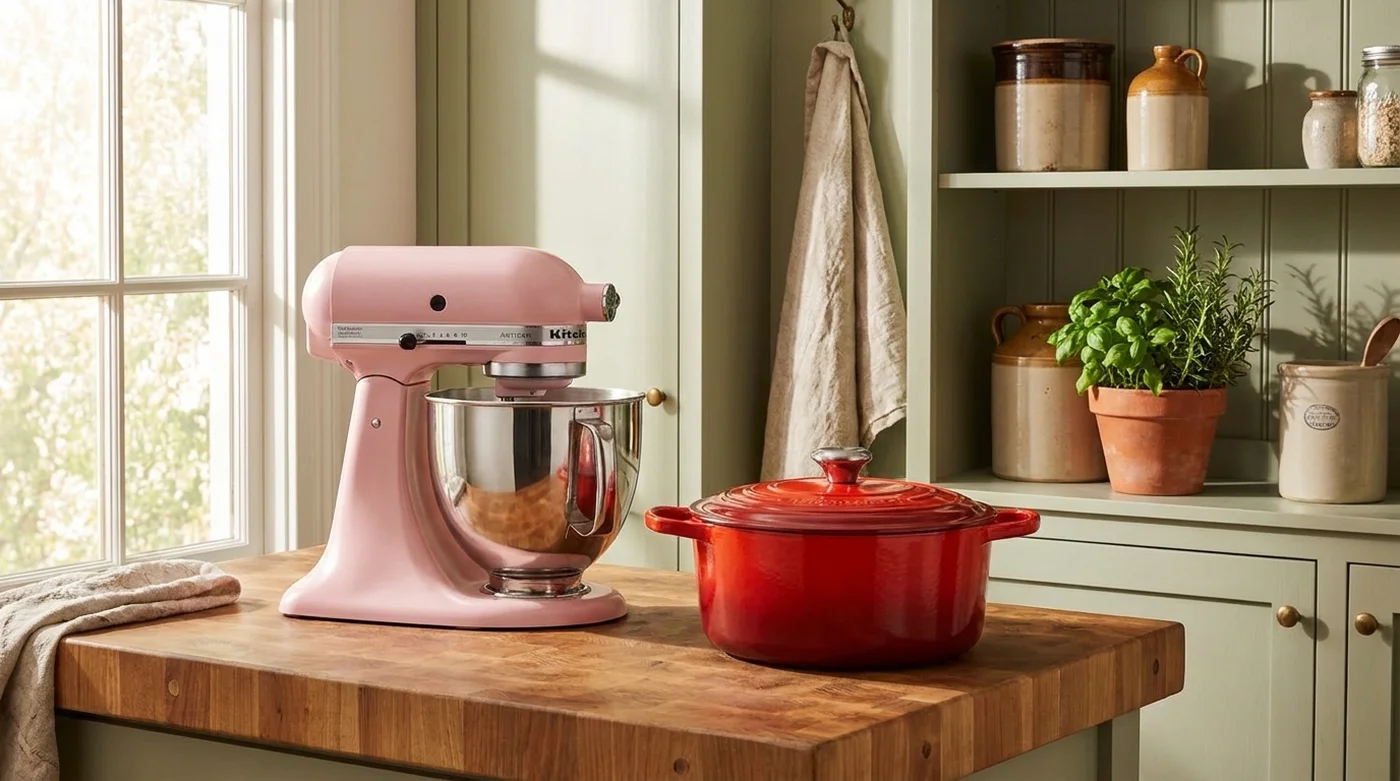

Weck 744 Tulip Jar Set of Six, 16.9 oz, with Glass Lids
These are the jars you have seen in every European farmhouse pantry photo, and they earn the hype. The tulip silhouette curves in at the shoulder and flares at the rim, so a row of them filled with strawberry jam looks like a shop display, and the all-glass lid means no metal ring to rust in a damp cupboard. The rubber-gasket-and-clip sealing system has been essentially unchanged for a century: you can see at a glance whether a jar sealed because the tab on the gasket points down. At 16.9 ounces each these suit big-batch jam makers who give whole jars as gifts.
Check price on Amazon →Cottagecore Kitchen compared at a glance





Shop the guide
Tap any piece to shop it.
- Weck 744 Tulip Jar Set of Six, 16.9 oz, with Glass Lids — These are the jars you have seen in every European farmhouse pantry photo, and they earn the hype.
- Weck Mini Tulip Jelly Jars with Glass Lids, Rings and Clamps, 6 Count — The small sibling of the classic tulip jar, and honestly the more useful one for jam.
- Ball Regular Mouth Glass Mason Jars with Lids and Bands, Half Pint 8 oz, Pack of 24 — If Weck is the pretty European cousin, Ball is the dependable American grandmother, and for serious preserving volume nothing beats a case of 24 half-pint jars.
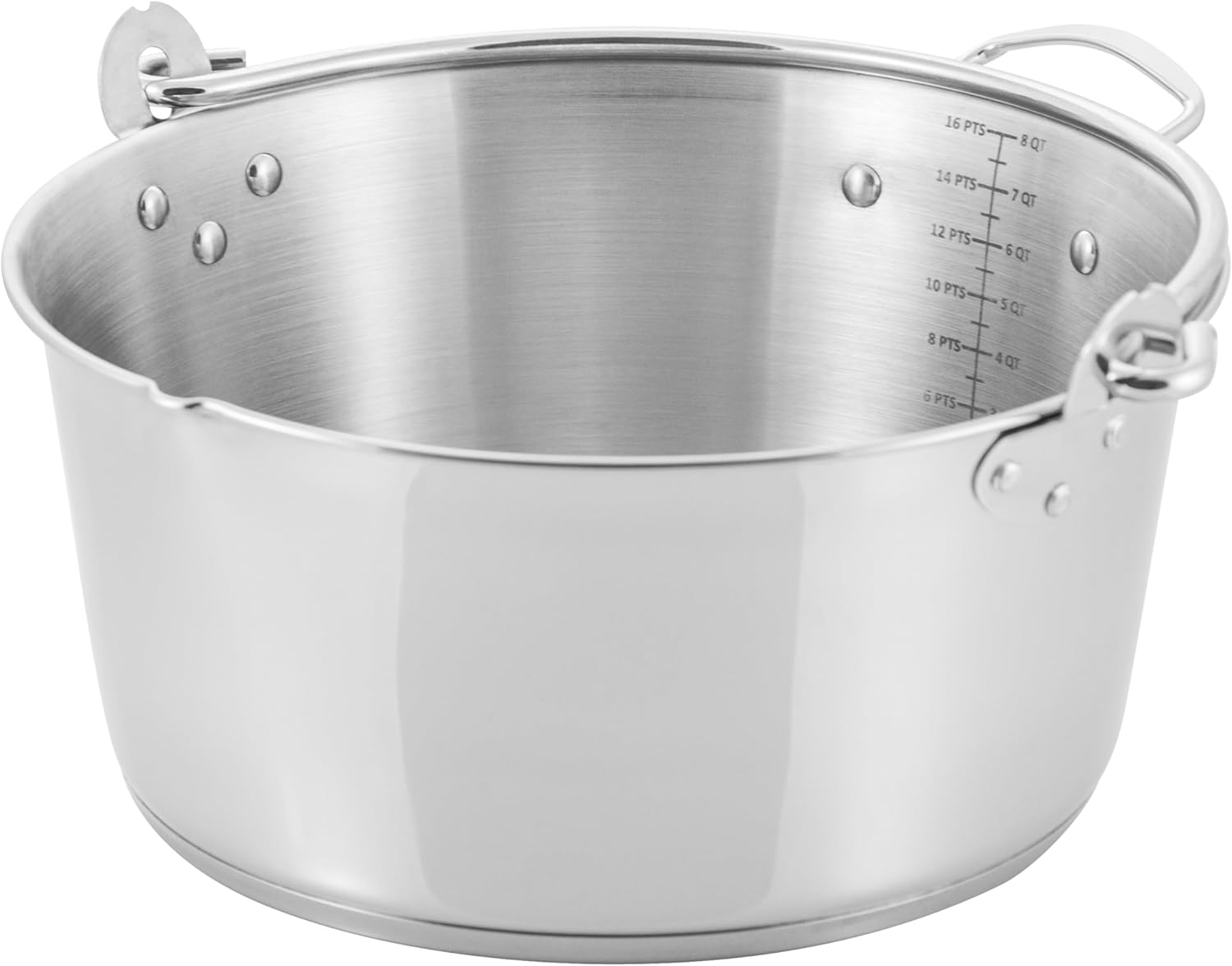
- McSunley 9 Qt Prep N Cook Stainless Steel Maslin Pan — A maslin pan is the traditional British jam-making pot, and once you cook a batch in one you will not go back to a stockpot.
- Supa Ant 24 Qt Water Bath Canning Pot with Rack, Lid and Tool Set — Everything you need to go from never-canned to shelf-stable jam in one box: a 24-quart stainless water-bath canner, the jar rack that keeps glass off the direct heat, plus the ladle, funnel and measuring tools.
- Stainless Steel Canning Tools Starter Kit with Jar Lifter, Funnel, Tongs and Rack — If you already own a big pot, this little kit is the cheapest route into safe canning.
- Le Parfait Familia Wiss 24 oz Wide-Mouth Canning Jars, 4-Pack — The Familia Wiss is the jar French home cooks actually use.
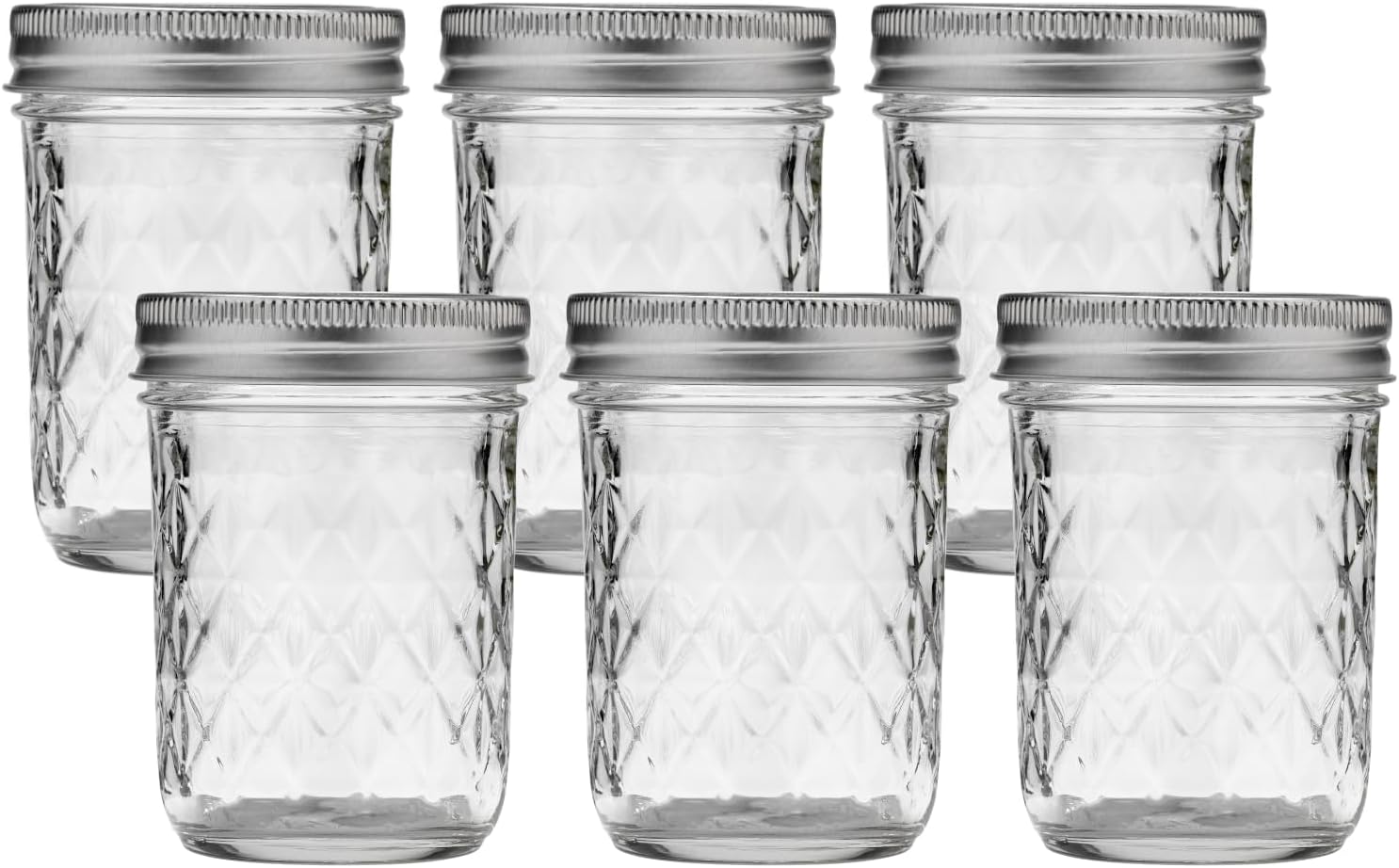
- Ball Quilted Crystal Half-Pint Mason Jars with Lids and Bands, 8 oz (6-Pack) — The diamond-embossed Quilted Crystal is the jar most people picture when they picture homemade jam, and it catches light on a shelf in a way the plain Ball jar does not.
- Delove Canning Funnel with Strainer for Wide and Regular Mouth Mason Jars, Stainless Steel, 3-Piece — Everything else on this page holds jam.
- IBAKE Writable Kraft Canning Labels, 2-Inch Round, 500 Stickers — Five hundred two-inch kraft rounds you write on with a normal pen, and by a wide margin the cheapest upgrade on this page.
- DLK Elasticated Cotton Jar Covers, Red Gingham, 10-Pack — Ten elasticated cotton caps in red gingham that pull over a filled jar like a little bonnet - the detail that turns a row of jam jars into something you can hand over without wrapping.
Evidence type: editorial research — specs, materials, and owner reviews compared across retailers; we have not hands-on tested these unless a guide says so. Links and prices last checked September 26, 2026. See our editorial policy.
There is a moment in July — berries cheap and fragrant at the farmers market, the kitchen smelling of sugar and fruit — when making your own jam stops being a quaint idea and becomes an urgent little mission. Pinterest calls it "grandmacore"; anyone who grew up with a preserving grandmother just calls it summer. Either way, the gear matters more than you might think. The right jars seal reliably, look beautiful lined up on a shelf, and turn a $4 basket of strawberries into a row of gifts. The wrong ones leak, rust, or refuse to seal at all.
This guide covers the canning jars we would actually buy for jam in 2026 — the heirloom-pretty German tulip jars, the dependable American classics — plus the pan and the water-bath tools that make the whole afternoon go smoothly.
How to choose canning jars for jam
Size down, not up. Jam is rich, and an opened jar lives in the fridge where its color and set slowly fade. Half-pint (8 oz) jars are the sweet spot for daily use, and quarter-pint minis are ideal for gifts. Save quart jars for pickles.
Pick your sealing system. Ball-style two-piece lids (a flat disc plus a screw band) are the North American standard: cheap, grocery-store replaceable, and what every tested recipe assumes. Weck's glass-lid-and-gasket system is more beautiful and fully plastic-free, but lids and gaskets only fit Weck jars. Both seal safely for water-bath canning; mixing systems mid-batch is where people get into trouble.
Check the mouth. Regular-mouth jars are marginally cheaper and hold heat better; wide-mouth jars are easier to fill and clean. For a pourable preserve like jam, regular mouth with a good funnel wins.
Buy real canning jars, not decor jars. Craft-store lookalikes are made of thinner glass that can crack under a rolling boil. Stick to Ball, Weck, Kerr or Bormioli for anything that touches a water bath.
Think about the pan too. A wide, flared maslin pan cooks jam faster and fresher-tasting than a deep stockpot, because evaporation — not just heat — is what brings jam to its setting point.
Our picks, in short
The Weck 744 tulip jars are the ones to buy when the jars themselves are part of the pleasure — pantry-shelf beautiful, plastic-free, endlessly reusable. Their mini jelly-jar siblings are the gifting size. For volume and value, the Ball half-pint 24-pack is unbeatable and works with every canning recipe ever printed in America. On the cooking side, the McSunley maslin pan makes noticeably better jam than a stockpot for about $65, the Supa Ant canner kit is the one-box beginner setup, and the $26 stainless tool kit covers you if you already own a big pot.
Jam-making also lands at the exact point in the year when the rest of the house starts changing over, and a row of filled jars on an open shelf is genuinely part of that — our cozy fall cottagecore decor guide covers the layers that go around them.
A note on safety (the two-minute version)
Jam is one of the safest things you can can at home: fruit plus sugar plus lemon juice is high-acid, which means a simple boiling-water bath — no pressure canner — gives you a shelf-stable seal. Use tested recipes for ratios, simmer your lids, leave a quarter-inch of headspace, and process half-pints for about ten minutes. If a lid does not pop down as it cools, that jar just goes in the fridge and becomes this week's toast. The National Center for Home Food Preservation publishes free tested recipes if you are starting from scratch. Once the jam is eaten, the storage question stays — glass pantry canisters are the matched, lidded version for flour, sugar and pasta.
Jars travel well, too. A couple of small jars of jam, a loaf and a wedge of cheese is most of a picnic already — pack them into one of the wicker picnic baskets with a proper flat base and nothing tips on the walk out.
Late-summer jam is really December's problem solved early. A row of labelled half-pints keeps for a year, and a jar tied with twine is the gift that fits every household — it sits comfortably alongside the rest of the cottagecore Christmas decorations when the shelf becomes the decoration.
FAQ
Can I reuse canning jars and lids?
Jars and screw bands: yes, indefinitely, as long as the rim is chip-free. The flat metal lids in the Ball system are single-use for canning — the sealing compound compresses once — so budget a couple of dollars for fresh lids each season. Weck's rubber gaskets are reusable until they stretch or crack; the glass lids last forever.
Do I really need a maslin pan, or will a stockpot work?
A stockpot works — millions of batches of jam have been made in one. But a maslin pan's wide top evaporates water faster, so the jam reaches its set in less time and tastes brighter because the fruit cooks less. If you make more than a couple of batches a year, it is the single upgrade that most changes the result.
What size jar is best for homemade jam?
Half-pint (8 oz) for everyday, quarter-pint (4 oz) minis for gifts. Jam keeps its color and set best in small jars because you finish them faster once opened — and small jars process a few minutes quicker in the water bath too.