The Best Aesthetic Butter Dishes for 2026 (Scalloped, Mushroom & French)
This post contains affiliate links. If you buy through them, we may earn a small commission at no cost to you.
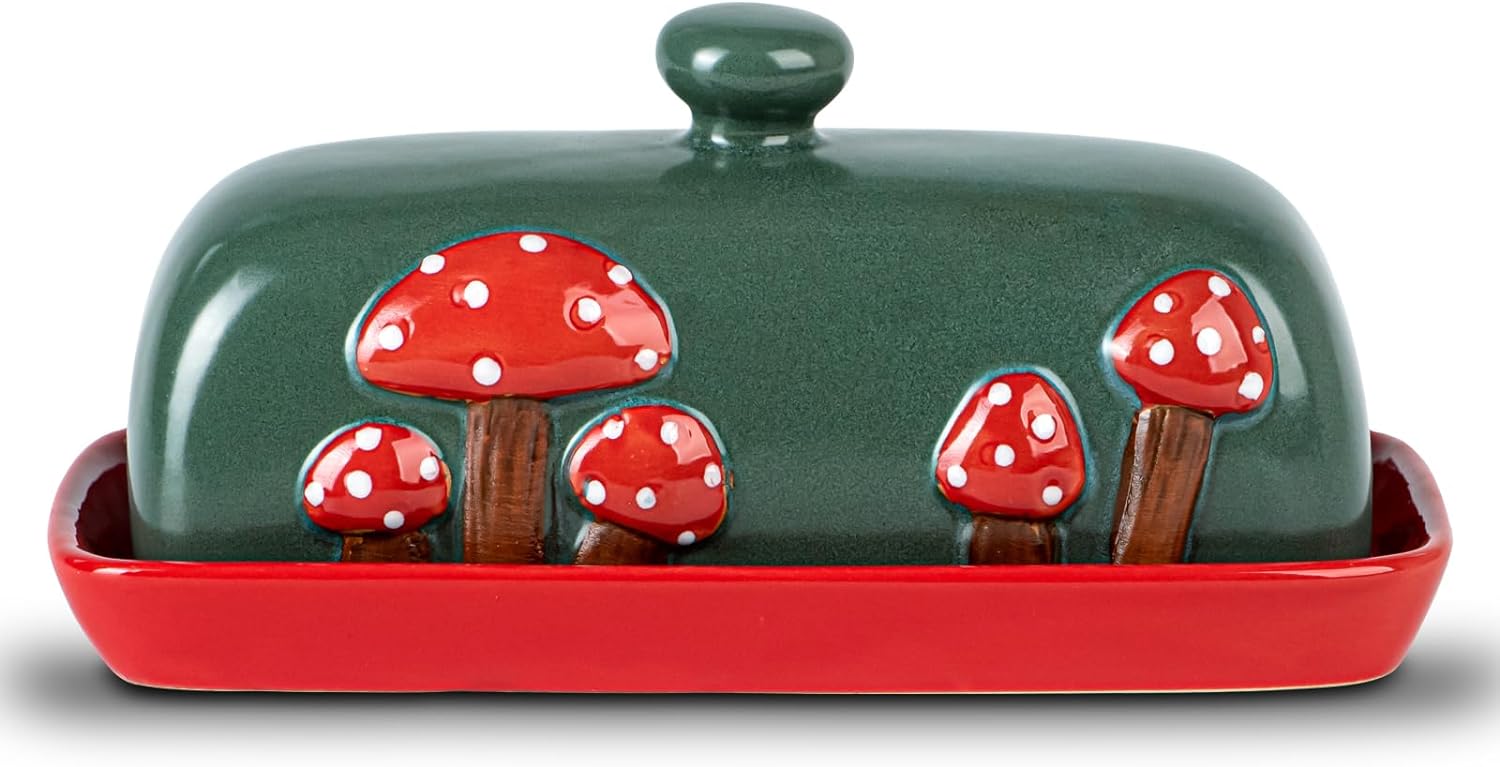
Our top pick among the butter dishes in this guide is Fungi Fun Mushroom Butter Dish with Lid ($21.99). A stoneware dish with a sculpted toadstool lid that still fits a standard stick of butter — the easiest way into the mushroom-kitchen trend. Check price →
Shop the Butter Dishes
Tap any piece to shop it.
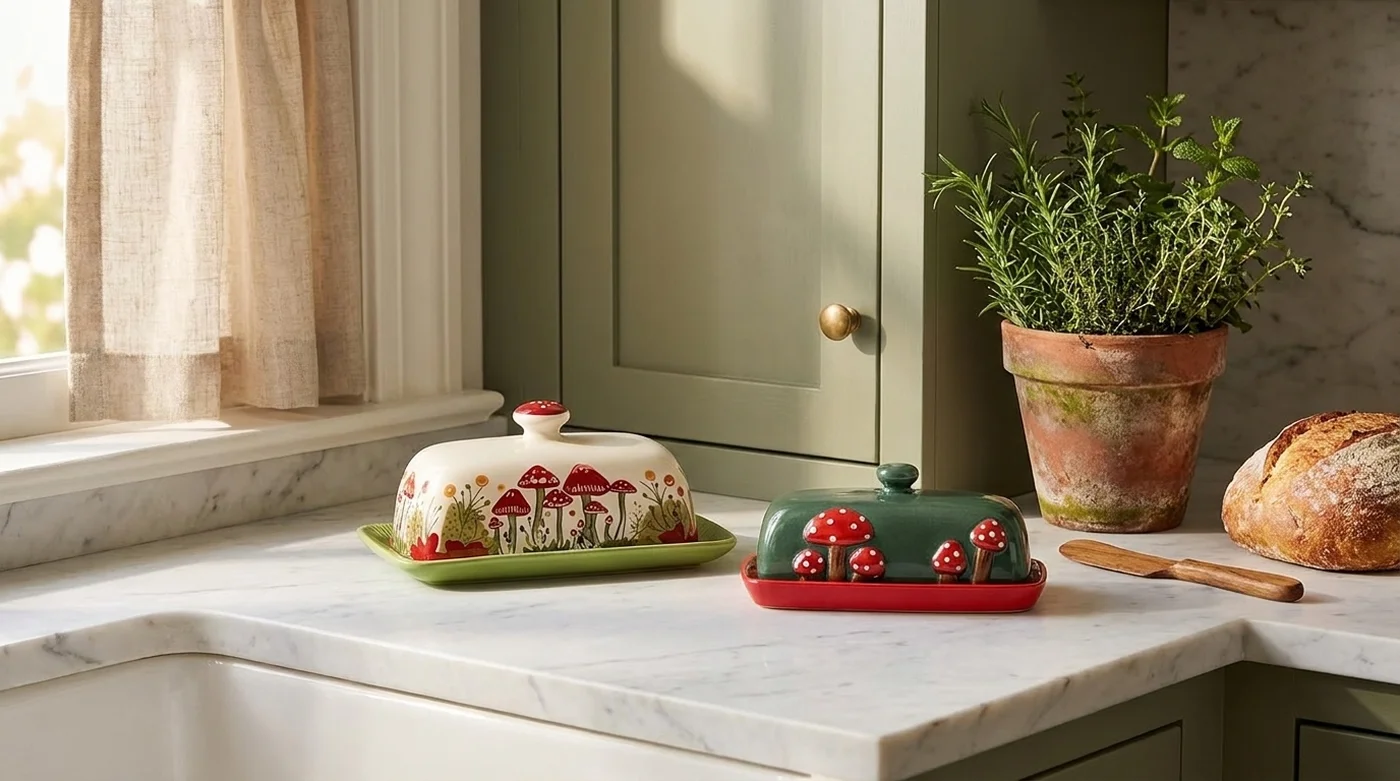

Fungi Fun Mushroom Butter Dish with Lid
A stoneware dish with a sculpted toadstool lid that still fits a standard stick of butter — the easiest way into the mushroom-kitchen trend.
Check price on Amazon →Butter Dishes compared at a glance






Shop the guide
Tap any piece to shop it.
- Fungi Fun Mushroom Butter Dish with Lid — A stoneware dish with a sculpted toadstool lid that still fits a standard stick of butter — the easiest way into the mushroom-kitchen trend.
- The Original Butter Bell Crock — The best-known water-seal beurrier in the US, in dozens of matte and glossy colors.
- Le Creuset Stoneware Butter Crock — Made-in-France enameled stoneware water-seal crock in Le Creuset's signature colors — the piece you keep for decades.
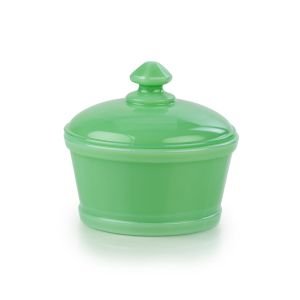
- Mosser Jadeite Glass Butter Tub — New, lead-free hand-pressed glass in vintage jadeite green (also milk-white and black) — the thrift-store look without the hunt.
- Old Havana Butter Dish — Portugal-made reactive crackle-glaze stoneware with a soft rounded rim — a quietly perfect everyday dish that's been a best-seller for years.
- Red Toadstool Mushroom Butter Dish — The classic red-cap, white-spot toadstool — bright, cheerful, and an easy gift under $30.
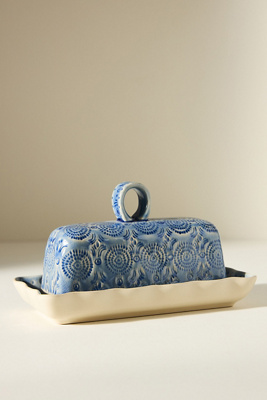
- Scalloped-Edge Stoneware Butter Dish — True scalloped-rim covered dishes from small potters — the silhouette that defines the whole trend, made one at a time.
- Sweese Porcelain Butter Dish with Lid — A best-selling minimalist porcelain keeper with a beechwood lid that doubles as a tray — fits both East- and West-Coast butter sticks.
- Emile Henry French Butter Pot — A handcrafted Burgundy beurrier with a water seal that keeps butter spreadable for weeks — beautiful glazes and a 10-year guarantee.
- Mason Cash English Stoneware Butter Dish — Heavy embossed English stoneware in the 200-year-old Mason Cash tradition — thick walls insulate the butter and it reads instantly 'grandmacore.'
- Anchor Hocking Glass Butter Dish — An affordable, made-in-USA pressed-glass covered dish with a vintage-diner curve — the antique look without the fragile antique price.
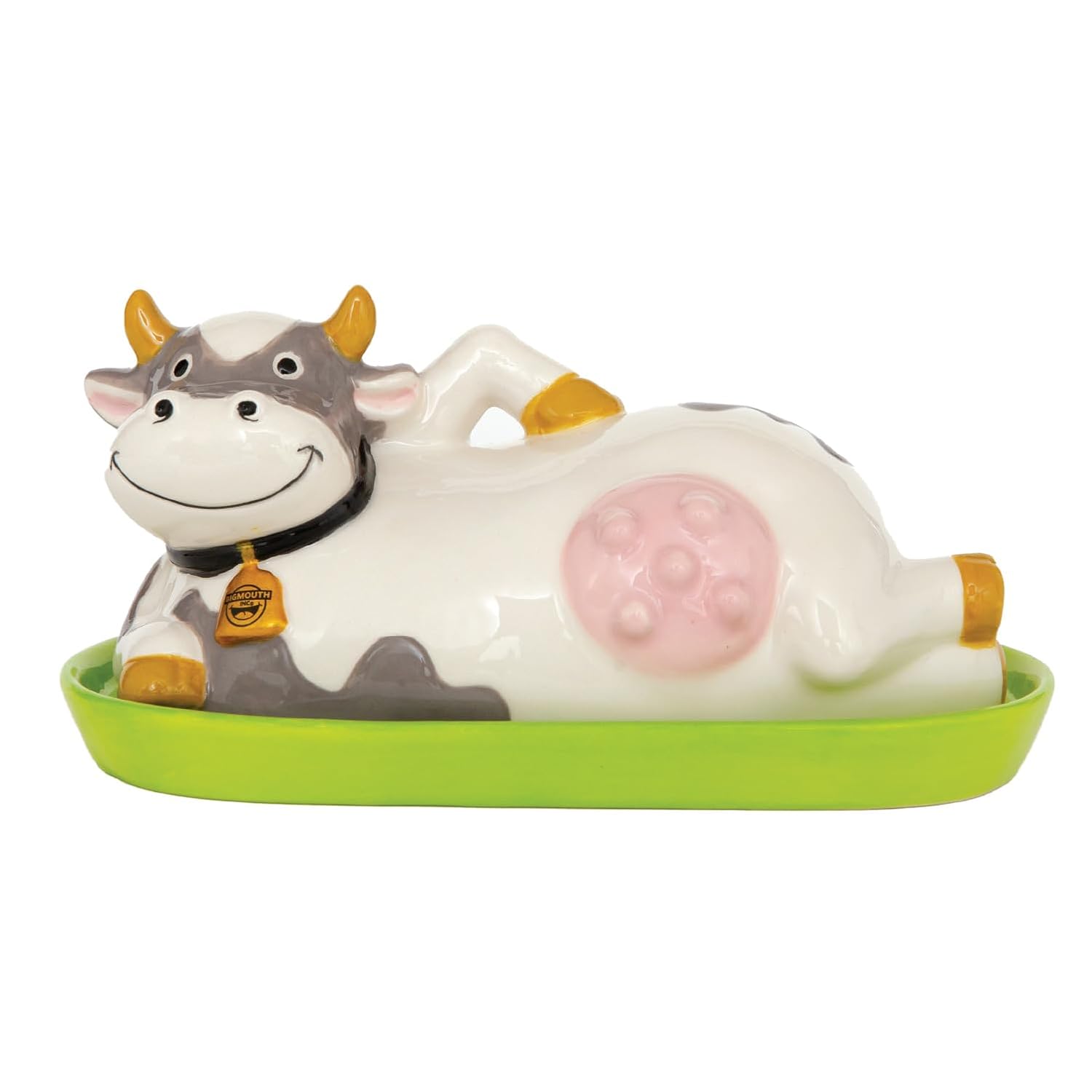
- Udderly Buttery Cow Butter Dish — A sculpted ceramic cow lid that leans all the way into the farmhouse theme — a genuinely charming gift that's different from the mushroom dishes.
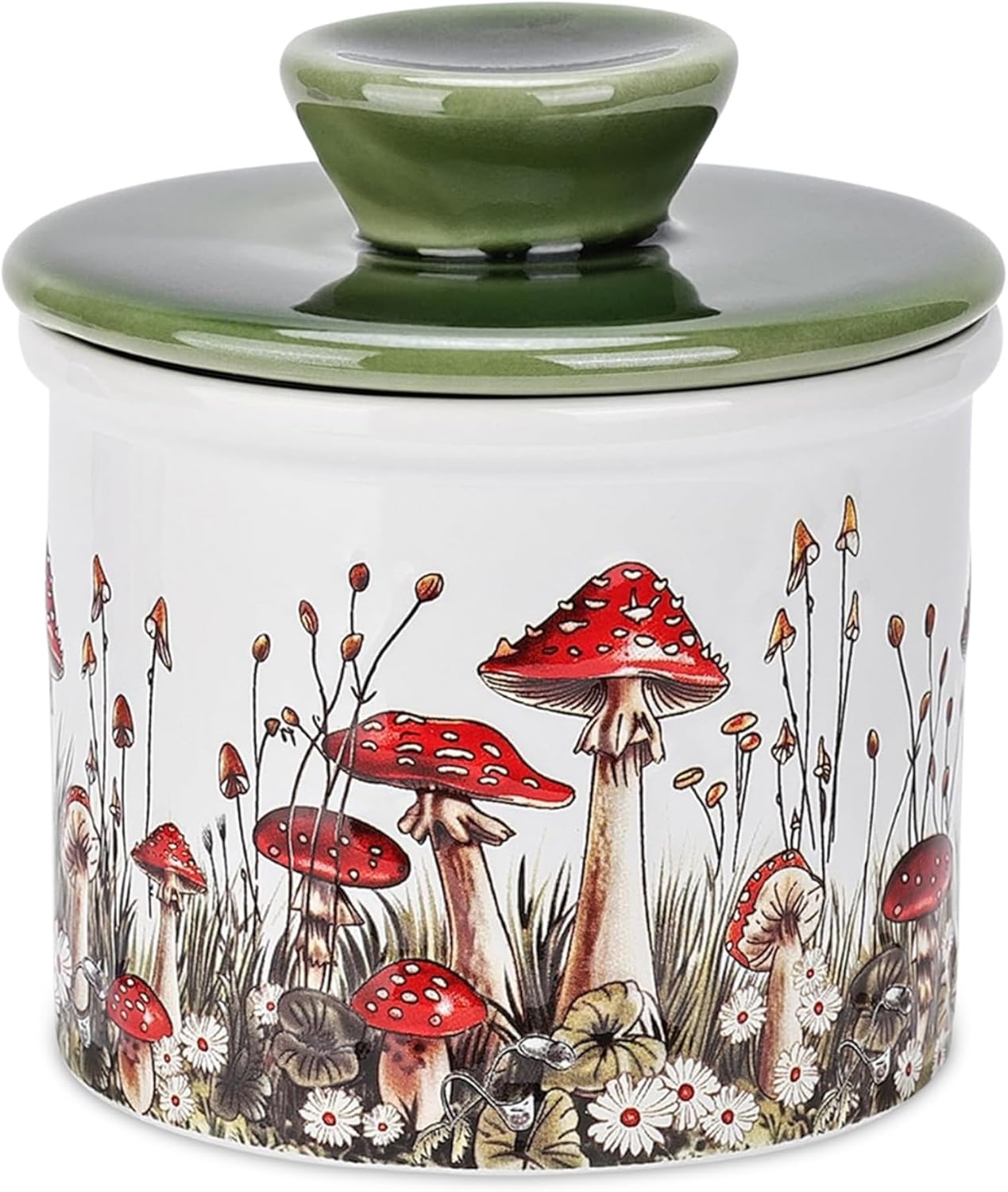
- Mushroom Butter Crock (Water-Seal) — A mushroom-shaped French-style crock that keeps butter soft and spreadable on the counter — function and whimsy in one.
- Handmade Mushroom Stick Butter Dish — A genuinely hand-thrown pottery mushroom dish sized for a stick of butter — the premium, one-of-a-kind pick.
- Ceramic Mushroom Butter Dish with Lid and Knife — Comes with a matching ceramic spreader, which sounds like a gimmick until you realise the alternative is a metal knife rattling around a ceramic dish every morning.
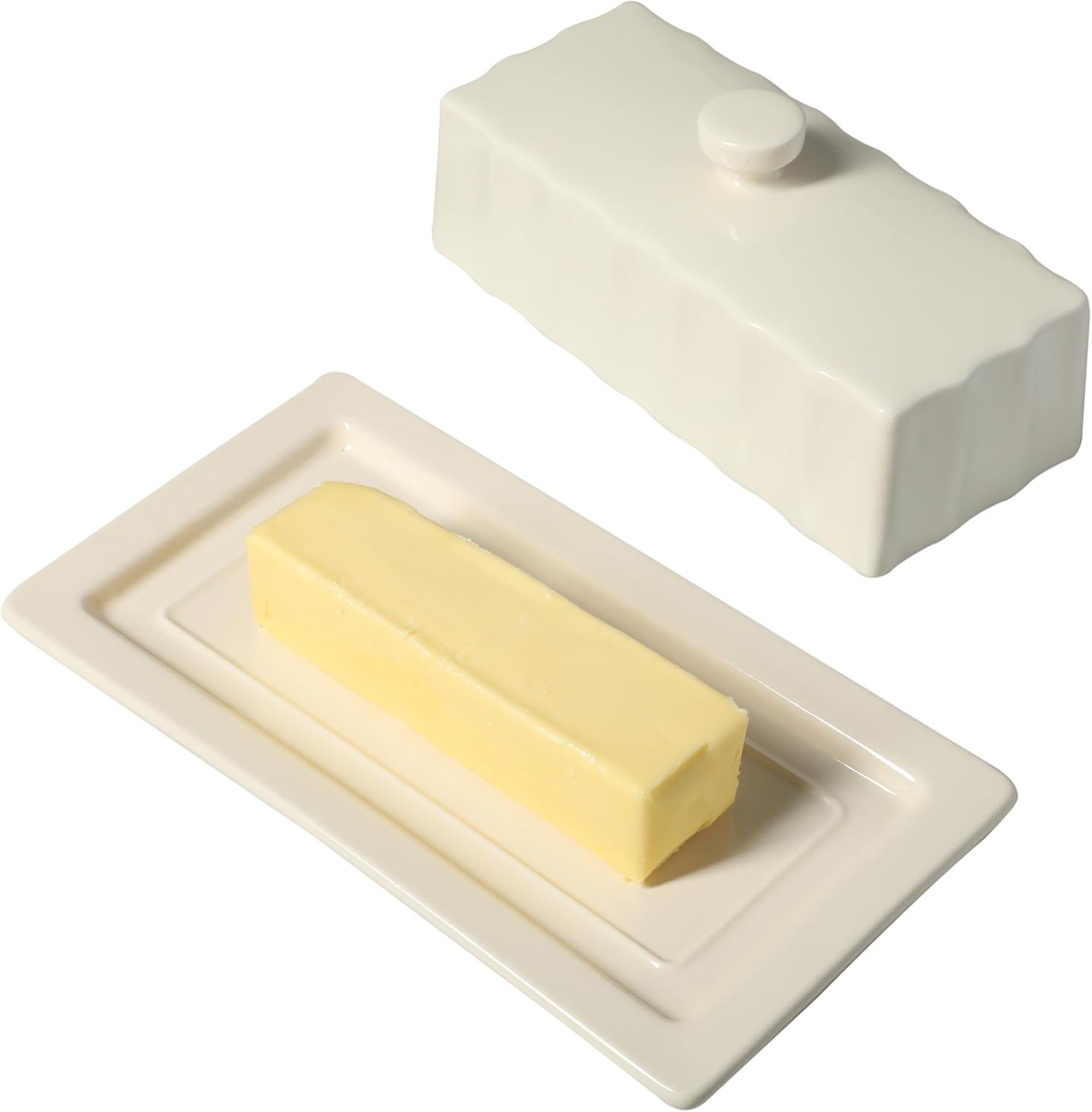
- Martha Stewart Broadbrook Stoneware Butter Dish — Thirteen dollars for a cream-glazed stoneware keeper that fits a full stick — the sensible baseline every other dish on this page is asking you to pay a premium over.
Evidence type: editorial research — specs, materials, and owner reviews compared across retailers; we have not hands-on tested these unless a guide says so. Links and prices last checked September 16, 2026. See our editorial policy.
If your kitchen counter could use one small, slightly impractical thing that makes breakfast feel like a moment — it's a butter dish. They've quietly become the tabletop obsession of 2026 (one UK retailer reported searches jumped over 100% last year), and the prettiest ones sell out fast. This guide rounds up the aesthetic butter dishes actually worth buying, and — more usefully — the handful of measurements and material questions that decide whether the one you order ends up on the table every morning or at the back of a cupboard by March.
Quick picks: Best overall — a scalloped ceramic lidded dish · Best novelty — a mushroom figural dish · Best for spreadable butter — a French beurrier · Best budget — a vintage-style glass dish under $25.
Why butter dishes are having a moment
The dark-cottagecore and grandmacore revival is about bringing back small, nostalgic details — the things a minimalist kitchen threw away. A butter dish is the lowest-commitment way in. It's cheap, useful, and instantly warms up a table. It also sits in the one spot where a pretty object earns its keep daily: you reach for butter more often than you reach for almost anything else you own, so a dish you like is a small pleasure repeated three hundred times a year. It belongs to the same family of small upgrades as a proper set of vintage kitchen accessories or decanted glass pantry canisters — things that do a job and look like they've always been there.
The six things that actually decide which dish you keep
Almost every disappointed butter-dish review comes down to one of these, and almost none of them are visible in a product photo.
1. Measure the butter, not the dish. This is the single most common return reason and the easiest to avoid. A US stick is roughly 4.75 in long by 1.25 in square. A European 250 g block is shorter and much fatter — about 4.7 by 2.5 by 1.5 in. Whipped or tub butter is neither and needs a crock. A dish listed as "fits a stick of butter" from a seller working in grams often doesn't, and a figural dish styled around a silhouette almost never does. Find the interior dimensions in the listing; if they aren't there, that omission is itself information.
2. Interior lid height, which nobody publishes. Cold, hard butter can touch a lid with no consequence. Butter kept at room temperature cannot — it softens, the lid smears it, and every time you lift the lid you drag the top layer with it. You want about a quarter-inch of clearance above the butter. On a counter dish this matters more than anything else on this list, and it is the reason tall-domed lids exist.
3. Water seal or dry lid. A French beurrier (a beurrier breton, if you want the proper name) inverts the butter into a bell that sits in a shallow well of water, and the water is what keeps air off the fat. That's the only design on this page that genuinely keeps butter spreadable for days at room temperature. The cost is maintenance: you change the water every two or three days, and it only works with salted butter in a kitchen that stays reasonably cool.
4. Whether the interior is glazed. Unglazed or partially glazed stoneware interiors look beautifully raw and absorb butterfat, and absorbed butterfat eventually goes rancid in a way no amount of washing fixes. If a listing describes a matte, unglazed or "natural clay" inside, treat it as a fridge dish for wrapped butter rather than a counter crock.
5. How the lid is lifted. A knob or a raised finial means one hand. A flush lid with only a shallow lip means two hands and a butter knife balanced somewhere. It sounds trivial until you're doing it half-asleep. Figural lids — a toadstool cap, a hen, a pumpkin — are almost always top-heavy, which makes them easy to grab and easy to knock over.
6. Trim decides dishwasher and microwave. Gold, platinum or lustre trim rules out both, permanently. Hand-painting applied over the glaze rather than under it wears off in a dishwasher within a season. Anything vintage and crazed — that fine web of surface cracks in old glaze — should never see a dishwasher either, because the detergent gets into the crazing and greys it.
Which type to buy, at a glance
| Type | Typical price | Fits which butter | Best for | Watch out for | | --- | --- | --- | --- | --- | | Scalloped ceramic, lidded | $20-40 | US stick; some European blocks | The grandmacore table; candlelight | Chips at the lid rim; check interior length | | French beurrier (water seal) | $25-45 | Salted, soft or packed butter | Genuinely spreadable counter butter | Water changes; slumps in a warm kitchen | | Mushroom and figural | $18-35 | Often less than you expect | Gifts; storybook kitchens | Capacity sacrificed to silhouette | | Pressed or milk glass, vintage | $12-25 | US stick | A collected, lived-in look | Crazing, chips, no replacement lids | | Stoneware crock | $25-45 | European block; whipped | Durability and daily use | Unglazed interiors absorb fat |
If you're buying one dish and want it to work every day rather than photograph well once, the honest order is: beurrier if you keep butter out, scalloped ceramic if you keep it in the fridge, figural only as a second dish or a gift.
The styles, and who each is for
Scalloped-edge ceramic
The defining silhouette of the trend. A scalloped lid catches candlelight beautifully on a moody table and reads instantly "cottage." Best for anyone leaning into the grandmacore look, and the easiest style to match to the rest of the table — the same rim turns up on scalloped dinnerware sets and scalloped salad plates, so one dish can be the start of a whole scheme rather than an orphan.
Mushroom & figural
The fun, collectible end. Mushroom dishes sit right at the intersection of two rising aesthetics and make a genuinely great gift — they're a reliable answer in any cottagecore gift under $30 hunt. Still emerging, so the good ones move fast.
French butter dishes (beurriers)
The functional pick. A beurrier uses a water seal to keep butter soft and spreadable on the counter without spoiling — the actual problem a butter dish solves. Best for everyday butter lovers, and the one type where the design is doing real work rather than decorating a lid.
Vintage & glass
Pressed glass, milk glass, and amber depression-style dishes bring real antique character for very little money. Clear pressed glass shows every smear and fingerprint; milk glass hides both, which is why it survives on counters. Best for a collected, lived-in table — and it sits naturally beside jewel-toned coloured glassware.
The mushroom and figural dishes worth grabbing
Mushroom decor and cottagecore collided, and the butter dish is where it landed. A little ceramic toadstool on the counter is the kind of detail that makes a kitchen feel like a storybook — and makes a genuinely good gift. Because these are handmade or small-batch more often than not, the good ones disappear quickly.
The Fungi Fun toadstool dish is the one to start with: it's the rare figural dish that still fits a standard wrapped stick of butter, which most novelty dishes quietly don't. If you keep butter on the counter rather than in the fridge, the mushroom water-seal crock solves the actual problem — it holds butter soft and spreadable for days — though it suits soft or packed butter rather than a wrapped stick. The red toadstool dish is the most storybook-looking of the three and the easiest gift under $25, but it's a generic listing whose stock rotates, so check it's live before you count on it.
Above that price, small studios sell genuinely hand-thrown mushroom dishes sized for a stick of butter. They cost roughly double the mass-produced versions and ship without Prime, but they're one-of-a-kind in a way an import never is.
A note on the trade-off: figural dishes prioritise shape over capacity. Measure your butter — US sticks need a long narrow well, European blocks and whipped butter need a rounder crock — before falling for a silhouette.
Honest drawbacks
Nobody writes these down, so here they are.
A counter dish commits you to salted butter. Salt is the preservative doing the work. Unsalted butter left out goes off noticeably within a couple of days, water seal or not. If you bake with unsalted and eat salted, you need the fridge as well, not instead.
The lid rim is where ceramic chips, and it shows. Lids get set down on counters, knocked against taps and stacked. A chip on a plate hides under food; a chip on a butter-dish lid is at eye level on a bare counter. Buying a lidded dish means accepting that the lid is a consumable, and that replacement lids essentially do not exist — for vintage pieces, certainly not.
Figural dishes hold less butter than the photograph suggests. A toadstool cap has to be tall, which means the base is short. Plenty of them take half a stick. That's fine if you know it going in and a daily irritation if you don't.
Beurriers fail in a warm kitchen. Above roughly 70°F / 21°C the butter softens enough to slump out of the bell and into the water, and you come down to a cloudy well and a half-empty bell. They're a cool-kitchen device. They also leak if you overfill the water or carry them tilted.
Clear glass is unforgiving. Every smear, every crumb, every fingerprint. It looks wonderful clean and shabby by Tuesday. Milk glass, amber and opaque ceramic all hide the same daily reality.
Handmade means variable. A hand-thrown dish is one of one, which is the appeal, and it also means the lid fit you get is the lid fit you get. If a snug, rattle-free lid matters to you, buy machine-made.
Care and cleaning
Wash in warm water, never hot and never cold. Butterfat sets waxy and immovable in cold water, and water hot enough to melt it fast is hot enough to shock and craze a cheap glaze. Warm, with a drop of detergent, is the whole method.
For the yellow film in the corners, use a bicarbonate paste. That film is oxidised butterfat, not dirt, and scrubbing at it with a sponge just polishes it. A paste of bicarbonate of soda and a little water, left five minutes and wiped, lifts it without abrasion.
Change beurrier water every two to three days. Cold tap water, filled to just below the rim so the bell displaces rather than overflows. You don't need to salt it. If the water goes cloudy sooner than that, your kitchen is too warm for the method.
Never store a damp dish with the lid clamped on. Trapped moisture in a sealed ceramic dish smells of mildew within a week and the smell transfers straight into the next block of butter. Dry both parts, then assemble.
Hand wash anything crazed or vintage, and don't soak it. Crazing is an open network of cracks through the glaze; detergent and long soaks get in, grey the lines permanently and can lift the glaze at the edges.
Deodorise with dry mustard powder or a cut lemon, not bleach. A teaspoon of mustard powder made into a paste, or the cut face of a lemon rubbed round the interior and rinsed, neutralises old-butter smell. Bleach leaves its own smell in porous ceramic and is far harder to get back out.
Take a fridge dish out twenty minutes before breakfast. The commonest complaint about fridge butter isn't the dish, it's the temperature — and twenty minutes on the counter solves it more reliably than any piece of equipment.
Setting the table around it
A butter dish is rarely bought alone. It tends to arrive with the rest of a table being slowly assembled — a washed linen tablecloth to soften a hard table, mismatched glass, a candle or two. If you're building toward a proper autumn table, it sits naturally in the same setting as pumpkin dinnerware and harvest tableware and the slow, long-lunch approach in our fall supper club tablescape. For the whole-kitchen version of the look, see the complete dark cottagecore kitchen guide, and browse everything in this cluster on the butter dishes category page.
FAQ
Are butter dishes useful or just decorative?
Both. A covered dish keeps butter from absorbing fridge odors, and a French beurrier keeps it spreadable on the counter for days.
Does butter go bad on the counter?
Salted butter is generally fine at cool room temperature for several days, especially sealed in a water-cap beurrier. Unsalted butter is not — salt is the preservative doing the work, so unsalted should stay in the fridge.
What's the most popular style right now?
Scalloped ceramic and mushroom or figural dishes are the breakout styles of 2026.
Where can I find mushroom butter dishes?
Small ceramic studios, independent makers, and a growing number of homeware brands now carry them.
Are they functional?
Yes — they're real covered butter dishes, just shaped like a toadstool. Check the listed capacity for your butter type, because figural shapes often hold half a stick rather than a full one.
How much butter does a standard butter dish hold?
Most rectangular dishes are built around one US stick, about 4.75 inches long and 1.25 inches square. European 250 g blocks are shorter and roughly twice as thick, so they need a wider dish or a crock. If a listing gives only exterior dimensions, assume the usable interior is at least half an inch smaller on each axis.
How often should I change the water in a French butter dish?
Every two to three days, using plain cold tap water filled to just below the rim. There's no need to salt it. If the water clouds sooner, the kitchen is warm enough that the butter is softening into it, and you're better off with a lidded dish in the fridge.
Can butter dishes go in the dishwasher?
Plain glazed ceramic, stoneware and tempered glass usually can. Anything with gold, platinum or lustre trim cannot, and neither can hand-painting applied over the glaze or any vintage piece with crazing. When a listing is silent on it, hand wash — dishwasher damage to glaze and trim is not reversible.
Related guides
Keep building the cottagecore table with these companion guides:
- Scalloped dinnerware sets — the scalloped silhouette that pairs with a scalloped butter dish.
- Scalloped salad plates — the easiest way to add the same rim to your table.
- The best colored glassware — jewel-toned glass to set beside a glass butter dish.
- The complete dark cottagecore kitchen guide — how the butter dish fits the whole moody-kitchen look.
- Washed linen tablecloths — the surface everything above actually sits on.