The Complete Guide to a Dark Cottagecore Kitchen (2026)
This post contains affiliate links. If you buy through them, we may earn a small commission at no cost to you.
Our top pick among the cottagecore kitchen in this guide is Scalloped Stoneware Cake Stand ($48–68). A vintage-pedestal scalloped stand that doubles as everyday counter decor and a showpiece when you bake. Check price →
Shop the Cottagecore Kitchen
Tap any piece to shop it.
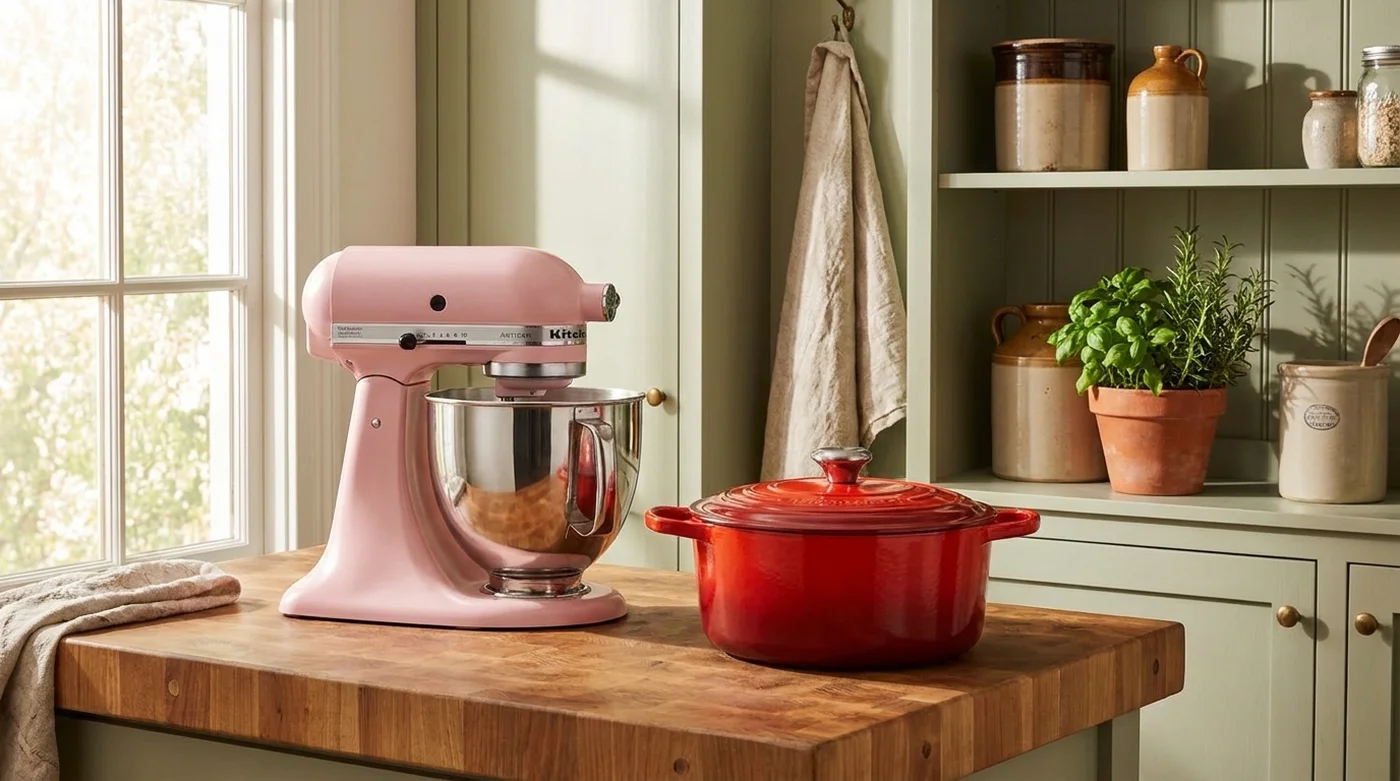

Smeg Retro Electric Kettle
Those 1950s curves in pastel sage or cream turn a kettle into the counter's focal point — the single most-photographed cottagecore appliance.
Check price on Amazon →Cottagecore Kitchen compared at a glance


Shop the guide
Tap any piece to shop it.
- Smeg Retro Electric Kettle — Those 1950s curves in pastel sage or cream turn a kettle into the counter's focal point — the single most-photographed cottagecore appliance.
- Romadedi Brass Taper Candlesticks (Set of 2) — Victorian-style brass tapers that deliver the after-dark glow at the heart of 'dark' cottagecore — the easiest, cheapest mood upgrade.
- Washed Linen Ruffle-Edge Napkins (Set of 4) — Soft European linen with a frilled ruffle edge in blush, sage, or oatmeal — the textile that makes a moody table feel lived-in, not staged.
- Brown Transferware Serving Platter (Vintage) — Dark, moody pastoral scenes on real vintage ironstone — the quintessential grandmacore serving piece, each one unique.
- Scalloped Stoneware Cake Stand — A vintage-pedestal scalloped stand that doubles as everyday counter decor and a showpiece when you bake.
- Floral Transferware Dinner Plates — New, food-safe transferware if you'd rather buy a matching set than gamble on vintage singles.
- Pfaltzgraff Midnight Blooms 12-Piece Stoneware Dinnerware Set, Service for 4 — Dark florals on black stoneware — the single piece that does the most work in a dark cottagecore kitchen, because it makes the mood read as intentional rather than simply not-white.
- Dark Moody Botanical Kitchen Towels, Set of 2 (16 x 24) — Old-master florals on a near-black ground — the cheapest way to test the dark-kitchen look before committing to plates or paint.
- Barnyard Designs Ceramic Utensil Crock, 6.75 in (Black) — Matte black glazed stoneware that holds a fistful of wooden spoons and reads as intentional rather than clutter — the cheapest single change that makes a countertop look moody.
- Gibson Home Zuma Matte Black Stoneware Dinnerware Set, Service for 4 — The one piece that changes the whole room rather than a corner of it.
- Denique Iron Taper Candle Holder Set of 3, Matte Black (tallest 15.5 in) — The brass pair higher up this list is the warm version of candlelight; this is the moody one.
- Bloomingville Black Stoneware Pitcher, Reactive Glaze — A matte black stoneware jug that earns its counter space three different ways: water on the table, a handful of cut greenery or dried grasses on the windowsill, and a utensil holder if you would rather not buy a separate crock.
Evidence type: editorial research — specs, materials, and owner reviews compared across retailers; we have not hands-on tested these unless a guide says so. Links and prices last checked September 15, 2026. See our editorial policy.
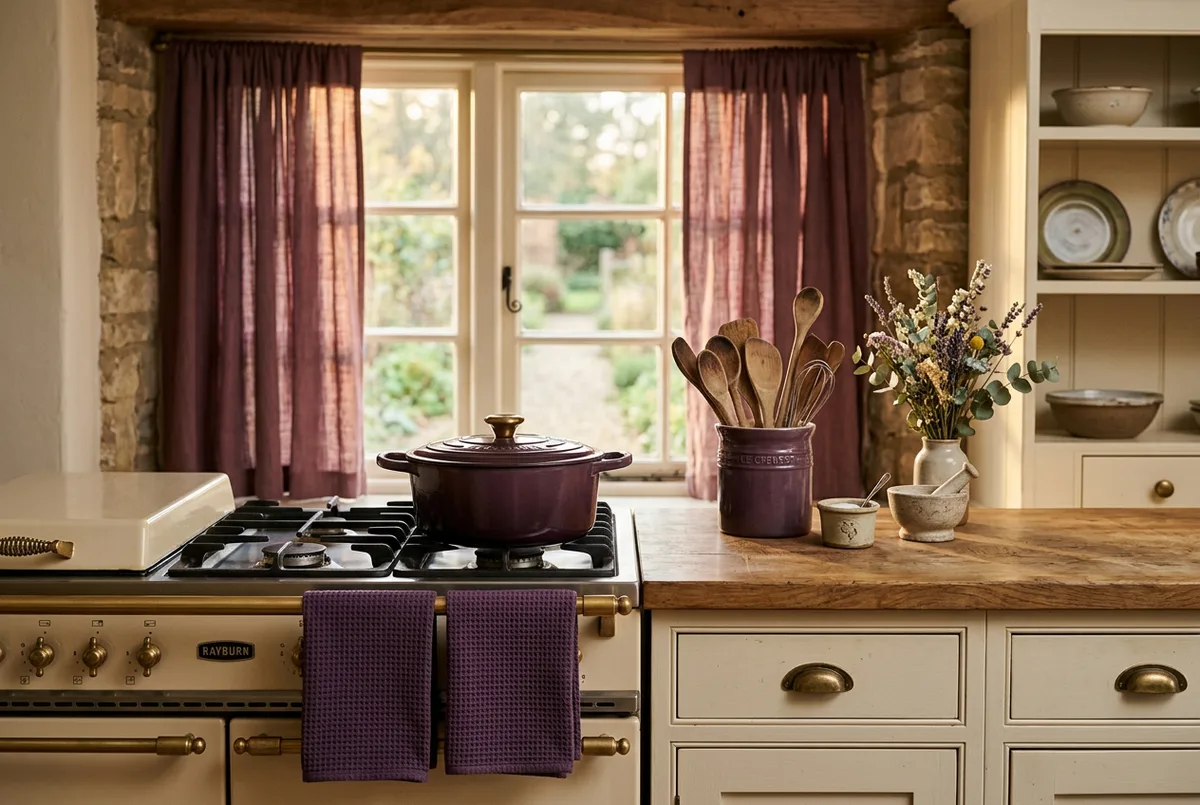
Dark cottagecore is what happens when cozy cottage charm grows up and moves into the evening. Instead of bright whites and pastels, think deep greens and aubergines, aged brass, candlelight, vintage ceramics, and a slightly witchy, lived-in warmth. It's one of the fastest-rising kitchen aesthetics of 2026 — searches for it climbed over 900% on Pinterest — and the best part is you don't need to renovate to get it. Most of the look comes from color and small finds. Here's how to build it, what to buy first, and the parts of it nobody warns you about.
What makes a kitchen "dark cottagecore"
Three things separate it from regular cottagecore:
- Moody color instead of bright — deep forest green, aubergine, charcoal, oxblood, warm near-black.
- Aged metals and natural materials — unlacquered brass, cast iron, wood, stone, linen.
- Vintage, collected detail — nothing matches perfectly; everything looks found over time.
That third point is the one that decides whether a room works. A dark kitchen bought in a single order reads like a display; the same pieces acquired over a year read like a home. Everything below is arranged so you can buy in that order.
The color palette
You can shift a whole kitchen's mood with paint and textiles alone. Try a moody base (forest-green or aubergine cabinets, or just a painted pantry door if you rent), warm cream walls, and brass or black hardware. Then add one unexpected accent — a chartreuse or persimmon dish towel — to keep it from going flat. Underfoot, a dark runner hides far more than a pale one does: the washable rugs like Ruggable picks come in deep greens and near-blacks that suit this palette and go straight in the machine when the moody floor meets spilled coffee.
If purple is where your eye keeps landing, the palette has its own guide — aubergine and plum kitchen accents covers the one colour in this family that is hardest to buy well.
How to judge a dark cottagecore piece before you buy it
Six things separate a piece that ages into the look from one that just looks dark in the listing photo.
Is the colour in the material, or on it? This is the single most useful test and almost nobody writes it down. Glazed-through stoneware is dark all the way to the clay; painted iron and printed cotton are dark only on the surface. It matters the first time something chips. A chipped black glaze shows a small pale scar you can live with; chipped painted iron shows bright bare metal that catches the light and reads as damage from across the room. Pay for glazed-through on anything that gets handled daily, and accept painted finishes only on pieces that sit still.
Check the undertone of the black. Blacks are not neutral. A cool, blue-leaning black next to aged brass looks grubby rather than rich; a warm black with brown or green in it is what makes brass and candlelight glow. If a photo shows the piece beside warm wood and it still looks slightly grey, it is a cool black.
Matte, satin, or gloss. Matte is the most photographed and the least forgiving — it shows water spots, fingerprints and cutlery marks, and it cannot be buffed out. Satin is the finish that survives daily use and still reads moody. Gloss black is the easiest to clean but bounces hard highlights that fight the soft-candlelight effect. For anything you will wash several times a week, satin is the answer.
Insist on one pale element per grouping. Dark objects visually recede and merge. Three dark things together on a dark counter become one shapeless mass. A cream candle, a pale linen, a raw terracotta foot on a dish, an unglazed rim — one light note per cluster is what gives the group edges.
Size up. Dark colours make objects read smaller than they are. A black utensil crock that looks generous in a listing photograph will look modest in a real kitchen; a small dark object against a dark wall effectively disappears. Where you are between two sizes, take the larger.
Count your light sources. This is the failure mode of the whole aesthetic. Dark surfaces absorb light instead of bouncing it, so a room that was adequately lit in white will be gloomy in charcoal. You want light at three heights: overhead, at eye level on a wall, and at counter level. Get that right and the room is moody; get it wrong and it is simply dim.
At a glance: what to buy, in what order
| Piece | Typical price | What it actually changes | Best for | Watch out for | | --- | --- | --- | --- | --- | | Brass or iron taper holders | $20–45 | The single biggest "dark" upgrade — real flame at counter height | Starting from scratch | Painted iron chips grey; plated brass wears at the handle | | Dark botanical tea towels | $14–20 | Tests the look for the price of lunch | Renters, the undecided | Printed cotton softens and fades with washing | | Matte or satin black dinnerware | $50–70 | Changes the whole room, not a corner of it | Committing properly | Matte shows water spots; unglazed foot rings scratch stacks | | Black stoneware pitcher or jug | $24–30 | Triple duty: water, stems, utensils | Small counters | Reactive glaze varies piece to piece | | Ceramic utensil crock | $22–28 | Makes existing clutter look intentional | Instant tidy-up | Undersized crocks won't take long ladles | | Vintage transferware platter | $25–90 | The "collected over years" signal | Open shelving | Singles only; check food-safety on true vintage | | Washed linen napkins | $28–55 | Softens a hard, dark table | Hosting | Handmade lead times; colours read softer in person | | Retro kettle in sage or cream | $170–200 | The pale counterweight the palette needs | A focal point | Premium price for the look alone |
If you buy in that order, the room looks deliberate at every stage rather than half-finished until the last box arrives.
The decor that does the heavy lifting (renter-friendly)
You don't need new cabinets. These small swaps carry the look:
- A scalloped or vintage butter dish on the counter — the trend's signature small object.
- Scalloped dinnerware displayed on open shelves or a plate rack.
- Candles and brass candlesticks for the after-dark glow that defines "dark" cottagecore.
- Colored or fluted glassware catching light on a shelf — the best colored glassware picks in amber and smoke are the ones that read warm rather than cold against a dark wall.
- Ruffle linen napkins and a washed-linen runner for soft texture — scalloped waffle towels in a deeper tone do the same job on the oven rail.
- Vintage-style small appliances — a retro kettle or stand mixer in cream or sage.
- Old kitchen tools left out on purpose — the vintage kitchen accessories guide covers the enamel, wood and ironstone pieces that do the "found over time" work better than anything new can.
- Dry goods moved out of packaging — a dark kitchen is undone faster by a bag of pasta than by the wrong plate. Decanting into glass pantry canisters in amber or smoke turns the one shelf you cannot hide into part of the scheme, and the pale grains inside supply exactly the light note that dark groupings need.
The same moody, candle-lit palette translates beautifully to a desk — dark academia desk decor covers the study version of this look.
A simple plan to put it together
- Pick your one moody color and commit to it across three or more items.
- Add brass or black metal in at least two places (hardware, a candlestick, a utensil holder).
- Put one vintage object on the counter — the butter dish is the easiest start.
- Add candlelight. This is the single biggest "dark" cottagecore upgrade.
- Layer linen and one bright accent to finish.
Wall light is the step most people skip, because it looks like a wiring job. It is not: a pair of plug-in wall sconces either side of a shelf or a window gives a dark kitchen the same layered glow as hardwired fixtures, and comes down with the picture hooks when you move. On a counter or a windowsill, the low glow of a mushroom lamp does the same job at plate height, which is where a moody kitchen actually needs it.
If the palette works in here it usually wants to continue. Moody dark floral bedding is the easiest way to carry it into the next room without repainting anything.
A dark kitchen is also the easiest room in the house to decorate in October — the palette is already there, so cottagecore Halloween decor reads as seasonal rather than costume.
What nobody tells you about living in a dark kitchen
The pictures are honest about the mood and dishonest about the maintenance. Six things worth knowing before you commit.
Dark surfaces show everything a white one hides. Crumbs, flour, dust, water spots and dried splashes all read as pale marks against dark. A matte black plate shows every drip of water it air-dries with. This is the opposite of the usual assumption, and it is the most common regret in reviews of black dinnerware.
It eats daylight. A north-facing or single-window kitchen that was merely dim in white becomes genuinely gloomy in charcoal by mid-afternoon in winter. If your kitchen already needs the light on at 3pm in January, treat the lighting plan as part of the budget rather than an afterthought.
Some of it is not reversible. Paint is, and textiles are. Dark grout, dark stone and re-stained cabinets are not, and undoing them costs real money. Renters and anyone who might sell within a few years should keep the commitment in the removable layer.
Chips announce themselves differently. Glazed ceramic chips to a small pale scar. Painted iron chips to bright bare grey. Powder-coated steel chips to a shiny silver dot. Knowing which failure you are buying tells you where in the room the piece belongs — painted metal away from counter edges, glazed ceramic wherever you like.
Bought all at once, it reads as a set. The aesthetic depends on looking accumulated. The fastest way to make a dark kitchen look like a showroom is to order everything in one week in one finish. Mixing eras and letting a few pieces arrive months apart is not just charming, it is the difference between the look working and not.
Real candles are real fire. This aesthetic puts open flame at counter height near tea towels, paper and loose sleeves. Trim wicks to a quarter inch, keep tapers at least a hand's width from anything fabric, never leave one burning in an empty room, and keep the holders off the edge of a worktop where a sleeve can catch them. Battery tapers have got convincingly good and are the sane choice on an open shelf.
Care: how to keep dark finishes looking intentional
- Matte black stoneware — hand-dry rather than air-dry; the spotting you are trying to avoid happens as water evaporates. Skip abrasive powders and citrus-based sprays, which etch matte glaze permanently.
- Cutlery marks on dark plates — those grey lines are metal deposited on the glaze, not scratches. A paste of bicarbonate of soda and water on a soft cloth lifts most of them; abrasive scourers make them worse by dulling the surface around them.
- Painted or cast iron — dry immediately, never put it in the dishwasher, and touch up chips early with a matte black enamel pen before rust starts under the paint.
- Antiqued brass — never polish it. The dark tone in the recesses is applied, and polish strips it back to bright yellow in one pass. Dust with a dry cloth only. Unlacquered brass is the opposite: leave it alone and let it darken.
- Candle wax on stone or wood — let it harden, or speed that up with an ice cube in a bag, then lift the disc off whole. Scraping warm wax drives it into the grain or the grout.
- Dark linen and cotton — wash cold, inside out, no chlorine bleach, and line-dry out of direct sun. Deep dyes fade fastest in sunlight, and a faded black towel is more noticeable than a faded cream one.
- Vintage transferware and ironstone — hand wash only. Fine crazing in old glaze absorbs dishwasher detergent and tea, and the staining is permanent.
FAQ
What's the difference between cottagecore and dark cottagecore?
Cottagecore is bright and pastoral; dark cottagecore keeps the vintage cottage charm but goes moody — deeper colors, candlelight, a slightly gothic, nighttime feel.
Can I do dark cottagecore in a rental?
Yes. The look is mostly textiles, ceramics, candles, and small decor — no renovation needed. Keep the commitment in the removable layer: plates, linens, candle holders, a dark runner, plug-in sconces. Save paint for a pantry door or the inside of a cabinet, which repaints in an afternoon.
What colors are dark cottagecore?
Forest green, aubergine, oxblood, charcoal, and warm near-black, with cream and aged brass, plus an occasional chartreuse or persimmon accent.
Will a dark kitchen make a small room feel smaller?
Less than people expect, if the lighting is right. Dark walls blur where the corners are, which can make a small room read as larger and softer rather than boxed in. What actually shrinks a room is a dark scheme with a single overhead light. Add light at three heights and a small dark kitchen feels enveloping; skip that and it feels cramped.
Do I need dark cabinets to do this look?
No, and starting there is usually a mistake. Most of the effect comes from what sits on the counters and shelves — ceramics, metals, textiles, candlelight. Build that layer first and live with it for a season. If the room still wants more depth after that, then consider paint.
What's the cheapest way to start?
Two dark botanical tea towels and a pair of taper candle holders, for roughly forty dollars together. Textiles and candlelight carry more of this aesthetic than anything expensive does, and both are reversible if you decide the look is not for you.
Does matte black dinnerware stain or scratch?
It does not usually stain, but it marks. Grey lines from cutlery are metal transfer rather than scratches and lift with a bicarbonate paste. Matte glaze also shows water spotting more than gloss, so hand-drying matters. If that sounds like too much upkeep, a satin or reactive glaze gives the same depth of colour with far more forgiveness.
How do I keep it from looking like Halloween decor?
Keep the black warm rather than cool, keep the shapes traditional rather than novelty, and make sure at least a third of what is visible is cream, brass, wood or terracotta. The moment a room is all black with cool undertones and pointed silhouettes it reads as costume. Dark cottagecore should look like an old farmhouse kitchen at dusk, not a set.
Related guides
Keep building the look with these companion guides:
- Cottagecore kitchen decor — every guide in this cluster, from dinnerware to small appliances.
- The best cottagecore candles — the candlelight that defines the "dark" in dark cottagecore.
- Grandmacore scents & brass candle holders — aged-brass holders for that after-dark glow.
- Aesthetic butter dishes — the signature vintage object to start with on the counter.
- Scalloped dinnerware sets — moody plates for open shelves and plate racks.
- The best colored glassware — fluted, jewel-toned glass that catches candlelight on a shelf.
- The best Smeg dupes — matte black and deep-toned retro appliances that suit a moodier kitchen.
- The best retro mini fridges — a small fridge in oxblood or charcoal for a pantry, den or bar corner.